
China Achieves First-Ever Thorium-Uranium Fuel Conversion in TMSR

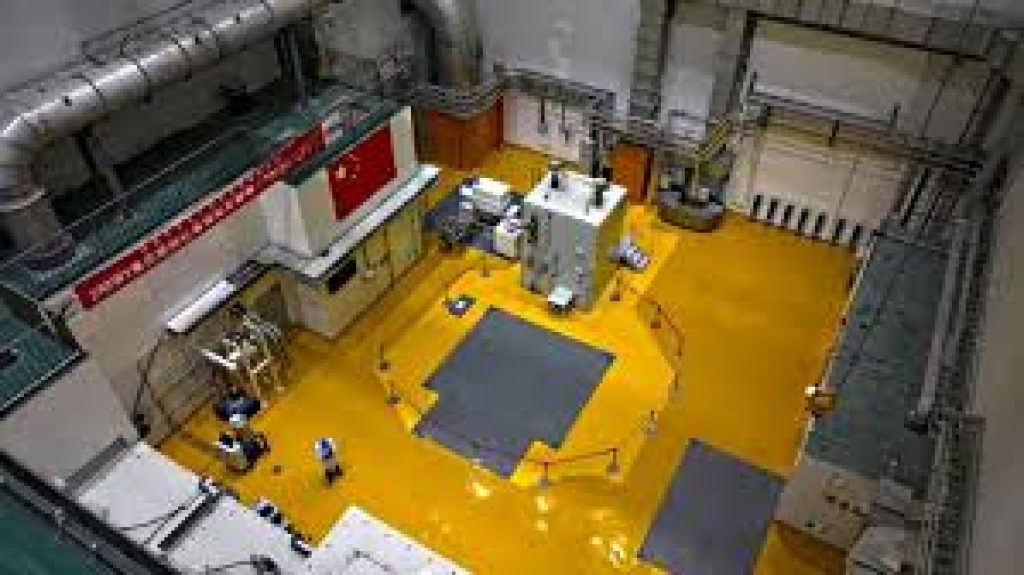
In a groundbreaking achievement in nuclear energy, China has successfully carried out the first-ever thorium-to-uranium fuel conversion within a Thorium Molten Salt Reactor (TMSR)—the world’s only operational reactor of its kind. Announced on 3 November 2025, this marks a major leap in the development of fourth-generation nuclear technology, promising safer, more efficient, and cleaner power generation for the future.
What is a Thorium Molten Salt Reactor (TMSR)?
A Thorium Molten Salt Reactor is an advanced nuclear system that uses molten salt instead of water as a coolant, and thorium as a fertile fuel source. The high-temperature salt mixture enables better efficiency and passive safety features.
Key Features of TMSR
- Operates at atmospheric pressure, reducing explosion risk
- Does not require water for cooling—ideal for arid regions
- Provides high thermal output for electricity or industrial heat
- Built-in passive safety systems—if overheated, the reactor shuts down automatically
This system can extract more energy from thorium than conventional reactors can from uranium, and it produces less nuclear waste.
Thorium to Uranium Fuel Conversion
Thorium-232, the naturally abundant isotope, is not directly fissile—it must be converted into Uranium-233 (U-233) through neutron absorption inside a reactor. China’s success in achieving this conversion inside a TMSR marks a crucial proof of concept for the thorium fuel cycle.
Why is this a milestone?
- It validates thorium’s role as a next-gen nuclear fuel
- Demonstrates in-reactor breeding of U-233, enabling sustained energy generation
- Opens the path for cleaner, longer-lasting, and safer nuclear energy systems