
First Leopard Population Survey in Guwahati

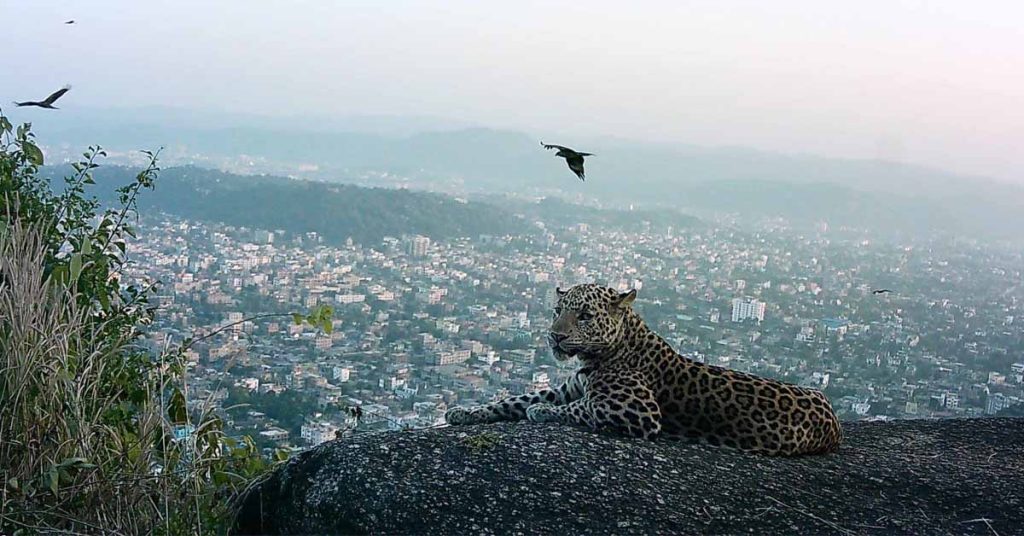
Guwahati has begun its first-ever leopard estimation exercise, installing about 200 infrared camera traps at 100 locations across forests, corridors and hill ranges. Early evidence confirms leopard presence across most city hills, including Nilachal, Gotanagar, Kharghuli and Amchang Reserve Forest.
The study identifies nearly 19 sq km as highly suitable leopard habitat and another 68 sq km as moderately suitable, much of it close to densely populated urban areas. The findings will guide science-based management and strategies for human–leopard coexistence in the city.
Key highlights of the survey:
- The first scientific leopard survey in the Guwahati hill areas confirmed the presence of leopards across multiple hills of the city.
- The survey used around 200 infrared camera traps placed in different forested locations.
- It was conducted by the Assam Forest Department with wildlife experts and conservation groups.
- Leopards were detected in several hills including Nilachal, Fatasil, Narengi, South Kalapahar, and other forest patches around Guwahati.
- The study highlights that Guwahati’s urban hills still support a viable leopard population despite rapid urbanisation.