
Gurjara-Pratihara

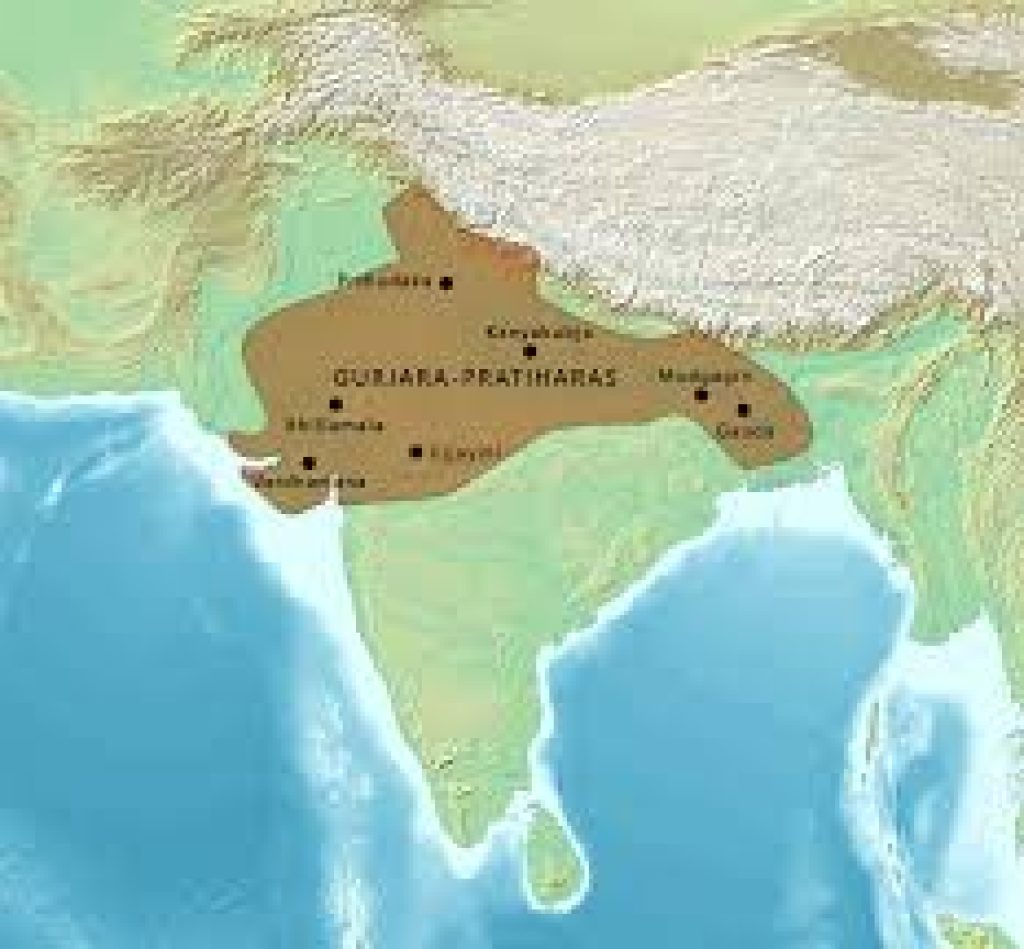
The Gurjara-Pratihara dynasty was a significant medieval dynasty in India and ruled over extensive territories in northern India, comprising all of modern Rajasthan at times, from the 8th to the 11th centuries CE. Among other things, they are noted for successfully resisting Arab invasions and helped shape the political landscape of the Indian subcontinent. They were also instrumental in promoting cultural and artistic development.
Important Points:
- Founding and Expansion:
The Gurjara-Pratihara dynasty was founded by Nagabhatta I, in the regions of Malwa, located in the modern Indian state of Madhya Pradesh during the 8th century CE. He was widely believed to be a Rajput. Their power rapidly expanded, especially as Nagabhatta I saw success against Arab attacks. - Capital Cities:
The Gurjara-Pratiharas had originally Ujjain as their capital city and would then shift the city to a new capital city, Kannauj. - Tripartite Struggle:
They were involved actively in the tripartite struggle with the Palas and the Rashtrakuta, fighting for control of northern India. - Notable Rulers:
Mihir Bhoja (c. 836-885 CE) is believed to be one of the most famous and powerful kings of the Gurjara-Pratihara dynasty, as referenced by Testbook and PWOnlyIAS. - Cultural Legacy:
The Gurjara-Pratiharas were pivotal in the promotion of the arts, architecture, and literature, and their reign saw the flowering of these syncretic pursuits that had lasting cultural impact. - Decline:
The dynasty of the Gurjara-Pratihara would decline over time, and their decline was hastened in the 12th century, due to the Muslim conquests.