
India Launches National Biobank for Health Research

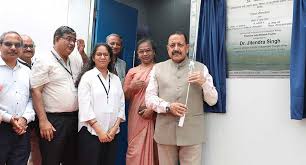
Dr. Jitendra Singh, Minister of State for Science and Technology Union Minister, launched the National Biobank at CSIR-IGIB on July 6, 2025, in New Delhi. The facility will allow researchers to collect health and genetics data of people across India to advance the early detection of disease and ultimately personalized treatment options for every individual.
India’s First National Biobank Launch
This first Biobank in India was commenced as a result of the Phenome India project, which aims to collect health, genetics, and lifestyle data of 10,000 individuals around India. The Biobank concept was modelled from the UK Biobank, but adapted to be useful in tracking and coordinating India’s diverse stratified population. This collected data will enable doctors and scientists to improve their knowledge of diseases such as cancer, diabetes, heart disease and rare genetics disorders.
Dr. Jitendra Singh stated that personalized treatment for healthcare that utilizes the specific genes and lifestyle habits of a person will become a reality for each individual soon. He stated that the data and work being done in India will enable personalized treatment that works better, faster and provides effective resolutions to medical conditions. The launch event took place at the CSIR-Institute of Genomics and Integrative Biology (IGIB) facility in New Delhi.
Addressing India’s Specific Health Needs
Dr. Singh noted that Indians experience particular health problems, not least central obesity, which is not always external but increases health risks. He stated the Biobank will be able to decode these hidden health risks and produce better solutions for Indian bodies. He also spoke of the need for strong partnerships among scientists, government departments, and industry, so that research can be translatable into useful products and treatments.
Progress in CRISPR and Other Research
The minister applauded the CRISPR-based genome editing work being done in India, especially relating to treatment of diseases like sickle cell anaemia and liver fibrosis. He said India is no longer lagging on science issues, and is now leading on topics like quantum tech, AI, and genomic medicine. The data from the Biobank will also aid future work in these areas.
Dr. N. Kalaiselvi, Director General of CSIR said the Biobank is the start of “baby steps” to assist India’s progress to become the world leader in health research. She stated the need to collect deep and detailed health data from India’s many different regions and communities. Dr. Souvik Maiti, Director of CSIR-IGIB advised on the institute’s journey in genomics and work on women’s health, COVID-19, rare disorders, and even space biology.