
Kalika Purana – Religious text

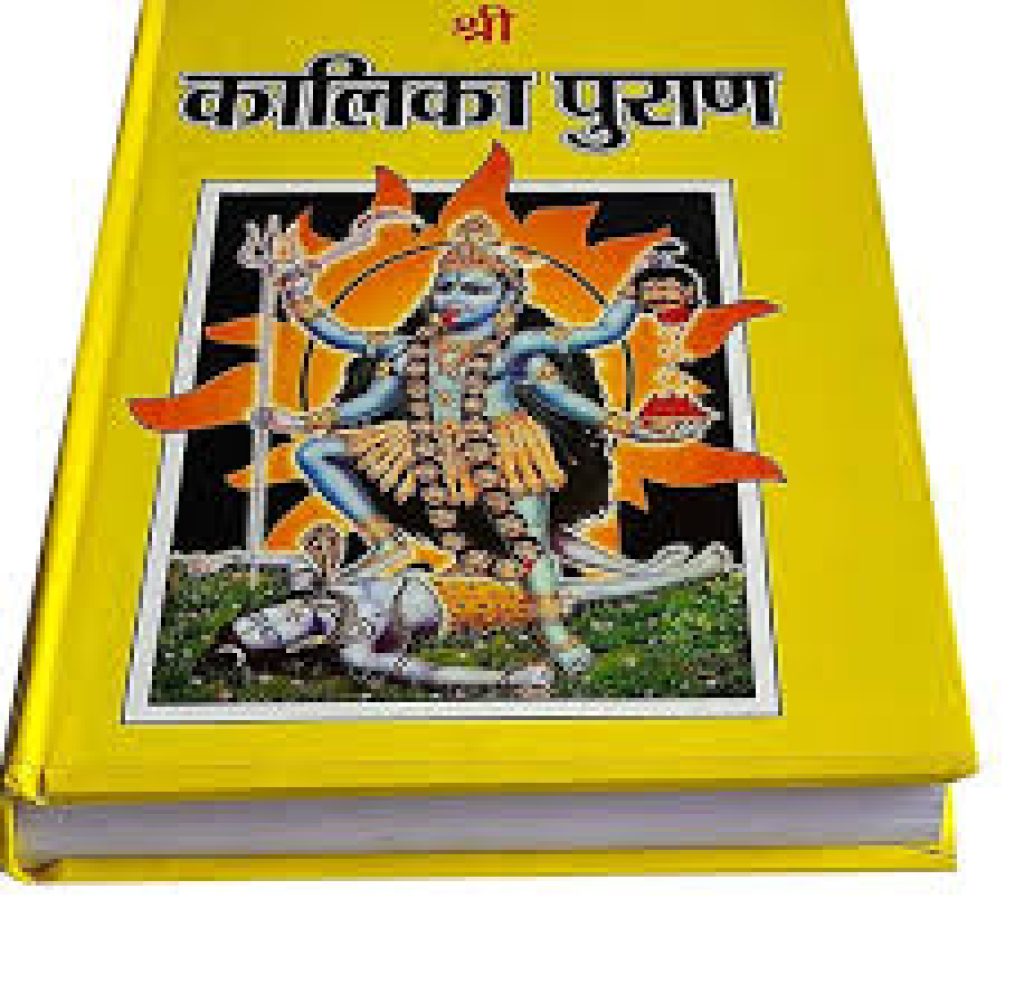
The Kalika Purana (कालिकापुराण) is one of the eighteen major Puranas, one of the Mahapuranas, in Hindu literature. It is a Shakta Purana, focusing primarily on the goddess Kali (one of the fierce manifestations of Devi or Durga) as the supreme deity.
Below are some main points about the Kalika Purana:
Content and Orientation:
- Devi Mahatmya: Although it expounds on Kali, the Purana describes many other forms of the Goddess; notably, Durga; and Kamakhya; and it contains stories similar to the Devi Mahatmya in the Markandeya Purana, describing the Goddess’ wars against many demons.
- The Kamakhya temple and Assam: The Kalika Purana is significantly related to the Kamakhya Temple in Guwahati, Assam. It has detailed descriptions of the origin and importance of the Kamakhya Pitha (sacred place and site) and the land surrounding it; it was known as Kamarupa at that time. The Kalika Purana describes the mythical origin of the temple, the form of the Goddess to be worshipped there, and describes many different rituals associated with her. Therefore, it should be a critical text for understanding the religious history and significance of Assam.
- Mythologies and genealogies: The narratives that exist in other Puranas about gods, goddesses, demons, sages, and the creation of the universe can also be found in the Kalika Purana. Also, genealogical accounts of royal dynasties, which is standard in Puranas, can also be found in this text.
- Rituals and worship: A central portion of the text is about the different rituals, modes of worship, festivals, and pilgrimages, including the Goddess’ festivals and pilgrimages. The Purana also sets out different types of offerings, mantras, and procedures associated with each type of worship.
- Geography: The Kalika Purana features geographical descriptions, particularly of the land of Kamarupa, describing miscellaneous sacred sites, rivers, and mountains.
- Cosmology and Philosophy: It also includes cosmological materials and philosophical discussions, especially ones associated with the Shakta tradition.
- Law and Society: Some sections include aspects of dharma (righteousness), social customs and duties.
Date and Origin: - Scholars date the Kalika Purana to the late Gupta period or early medieval period in the late 9th and possibly as late as the 11th century CE.
- The Purana’s origination is distinctly linked to the region of Assam (Kamarupa) due to the details in its discussion of the Kamakhya Temple in Assam and local geography and traditions. The particularity of the region is a particularly marked feature of the Kalika Purana.
Significance: - Religious History of Assam: It is a key source for early religious history of Assam, related especially to the growth of Shaktism and significance of the Kamakhya cult.
- Shakta Tradition: It is an important text within the indigenous Shakta tradition of Hinduism, representing worship practices and mythology surrounding the Goddess.
- Cultural History: The Purana provides small glimpses into the social, cultural and geographical environment of ancient Assam.
- Literature and Linguistic Value: It is an important text for the study of Sanskrit literature and how religious narratives develop.