
Rock-cut Elephant at Dhauli

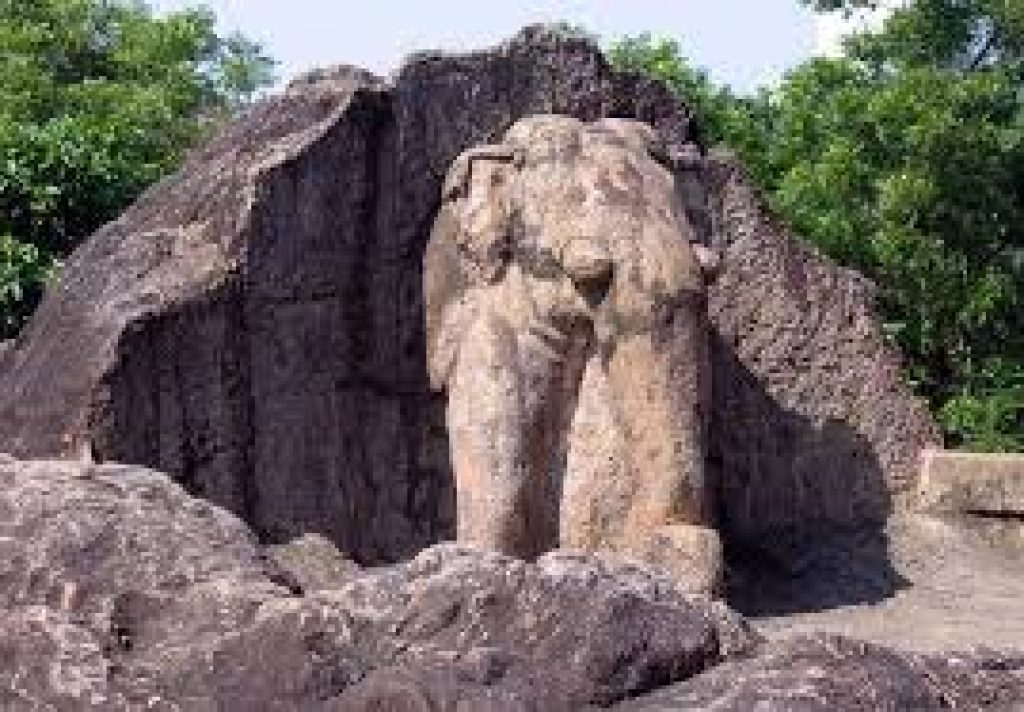
The Rock-cut Elephant at Dhauli is an important Buddhist sculpture located near Bhubaneswar, in Odisha, India. It is carved into rock and is thought to be among the earliest examples of rock-cut art in Odisha. The Elephant is carved in a naturalistic style and it is believed to depict Ashoka’s conversion to Buddhism after the Kalinga War.
Key highlights:
- Location: Dhauli, near Bhubaneswar, Odisha
- Era: during the reign of Ashoka (272-231 BC)
- Style: Naturalistic / early example of rock-cut art in Odisha
- Representation: Only the foreparts remain, with only the head, ears, trunk, and forelegs visible as if either emerging from, or within, the rock
- Symbolism: possibly a representation of Ashoka having a peaceful conversion to Buddhism after the Kalinga War. The elephant in Buddhism is also often associated with peace and non-violence.
- Context: Part of a larger rock-cut complex that also included Ashoka’s edicts and other sculptures.
- Discovery: Discovered by British colonial officer Markham Kittoe in 1837.