
Tejas Aircraft

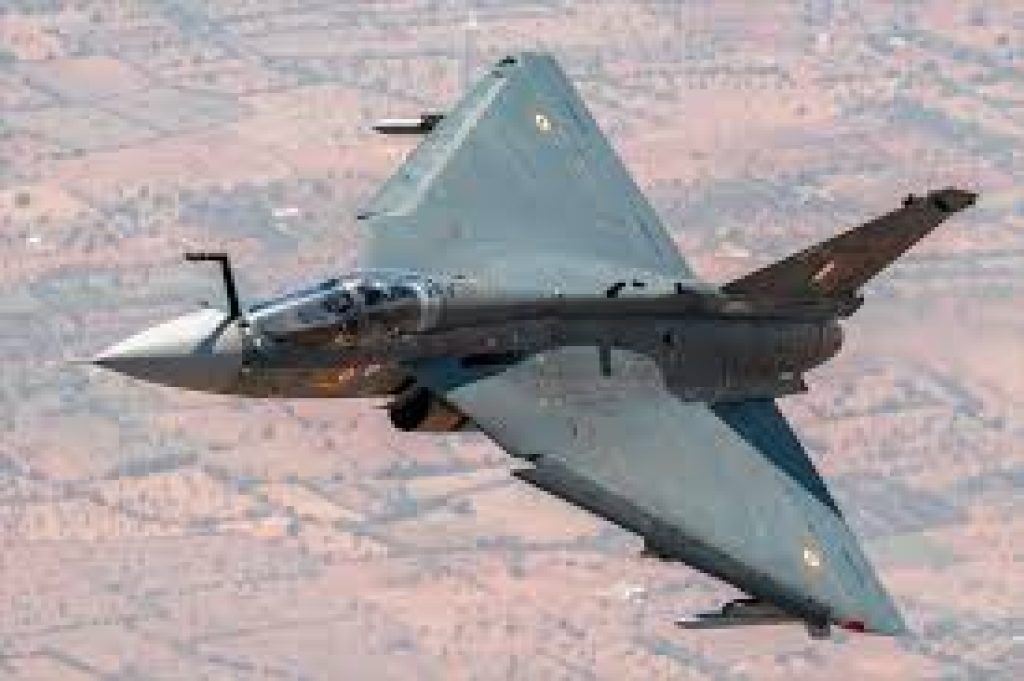
The Tejas is a single-engine, delta-wing, multirole combat aircraft that is developed and manufactured in India by Hindustan Aeronautics Limited (HAL). This aircraft is intended for air combat, offensive air support, and secondary air-to-ground options, such as reconnaissance and anti-ship, to name a few. The Tejas MK1A is an enhanced version of the original Tejas which features recent, advanced technologies such as AESA radar, beyond visual range (BVR) missile capability, and an electronic warfare (EW) suite. Below are some detailed key features, and capabilities.
Key Features and Capabilities:
- Multirole: This aircraft is designed for air-to-air combat fighter, air-to-surface strikes, and reconnaissance operations or missions.
- Request for Technologies: Tejas has acquired new technologies, i.e., AESA radar, BVR missile with augmentation of an EW suite married to a BVR missile with augmentation of an EW suite married to BVR missiles.
- Indigenous: HAL has sourced a number of components from indigenous manufacturers and supplier for the Tejas.
- Variants: Tejas MK1A is an upgraded version of the original Tejas and then there is the Tejas MK2 which is a further development after The Tejas MK1A.
- Payload Capacity: The Tejas can carry a payload of up to 4000 kg.
- Speed and Range: The maximum speed of the operating envelope is Mach 1.8, with an average range of 850 km.
- Low-Cost: Overall the Tejas may be classified as a low-cost aircraft with low operating costs due to the aircraft’s simple design, which may appeal to a number of nations attempting to keep their costs down.
Production and Orders - Production Orders:
HAL has production order from the Indian Air Force (IAF) for a total of 40 Tejas aircraft, 20 IOC – 20 FOC standard. - Indigenization: HAL is achieving a high indigenous content program with the Tejas program and quantity of parts used with indigenous manufacturers are expected to be 60% indigenous.
- Delays and Challenges: The Tejas program has incurred production delays, as well as delivery delays as at January 2023 as a result of delays in engine delivery.