
Varaha cave at Udayagiri

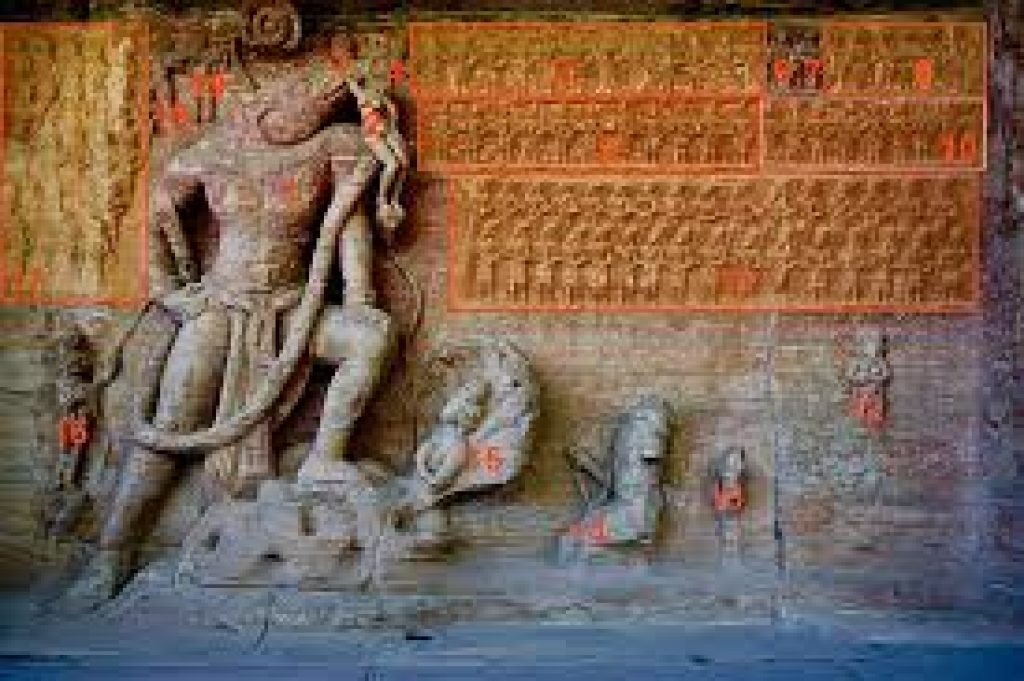
Varaha is the avatar of the Hindu god Vishnu, in the form of a boar at the Udayagiri Caves is among the most well-known relief sculptures in Cave 5 and expresses the story of Vishnu saving Bhudevi (Earth) from the cosmic ocean. As one of the few large relief sculptures representing Gupta art, it is an iconic face of the Udayagiri Caves.
Key highlights:
• Place: Udayagiri Caves, Vidisha, Madhya Pradesh, India
• Cave: Cave 5 (Varaha Cave)
• Subject: Vishnu as Varaha saving Bhudevi from the cosmic ocean
• Style: Large relief sculpture in a shallow niche style typical of Gupta art
• Significance: A powerful and iconic representation of a key event in mythology representing Vishnu’s power and the important position of the Earth goddess
More Details:
• The sculpture depicts a nara-varaha: Varaha possesses a human body (and that of a boar), Bhudevi is being held by Varaha as he lifts her with his giant shoulder
• Varaha depicts a pose of power and victory, right hand on his knee, left hand on the hip
• A serpent (Naga) is depicted at Varaha’s feet in submission, and the gods or sages surrounding Varaha recognize the miracle he performed
• The Varaha panel is considered among the most studied pieces of Gupta art, as well as the potential political significance related to Chandragupta II.