
Bridgeoporus kanadii — A Colossal New Fungus from Arunachal Pradesh

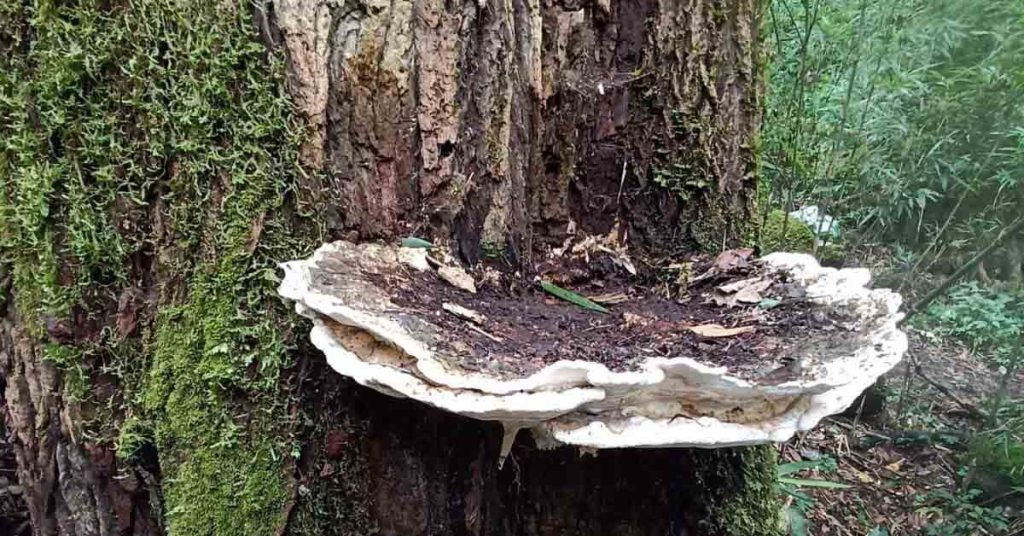
Bridgeoporus kanadii is a newly identified macrofungal species distinguished by its exceptionally thick, leathery and massive fruiting bodies, earning it the description “colossal.” The species was discovered in West Kameng district of Arunachal Pradesh, where it grows on old-growth Abies (fir) trees, indicating a strong dependence on mature forest ecosystems.
Key Details About Bridgeoporus kanadii
- Discovery: Found by the Botanical Survey of India (BSI) in the West Kameng district of Arunachal Pradesh, India.
- Size: Exceptionally large, perennial (grows year after year). The largest recorded specimen was over 3 meters (10 feet) in radius.
- Habitat: Thrives on old, dead or decaying fir trees (Abies) in the high-altitude forests of the Eastern Himalaya.
- Significance: It is the second known species in the Bridgeoporus genus worldwide (the other is the North American B. nobilissimus).
- Ecological Role: As a wood-rotting fungus, it is essential for forest health, aiding in decomposition and nutrient cycling by breaking down lignin and cellulose.
- Name Origin: The species is named after renowned Indian mycologist Kanad Das for his contributions to the study of Indian macrofungi.
- Edibility: Currently, researchers note that B. kanadii is not edible and does not hold immediate commercial or economic value.