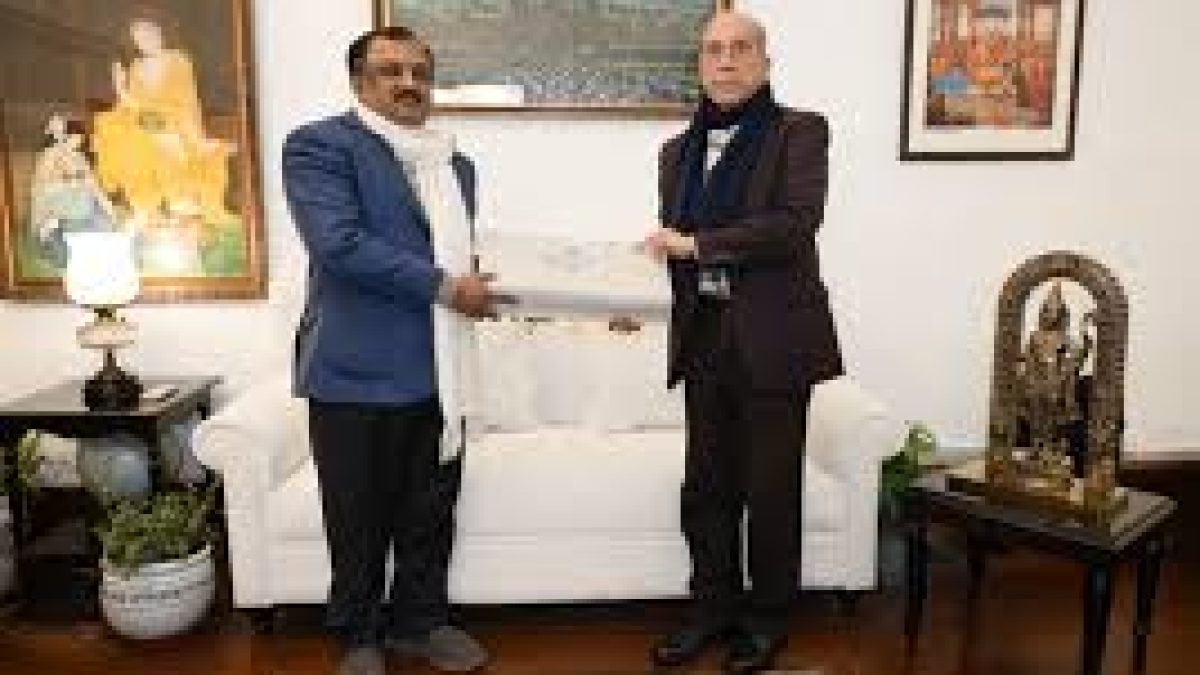
A 233-year-old Sanskrit manuscript of the Valmiki Ramayana, dating back to 1792 CE and containing the Tattvadipikatika commentary, has been permanently gifted to the International Ram Katha Museum in Ayodhya by the Central Sanskrit University.
Preserving five major kāṇḍas, the rare manuscript strengthens cultural heritage, provides scholars and devotees with wider access, and reinforces Ayodhya’s status as a global centre for Ramayana tradition.
Key Details of the Manuscript
- Age and Origin: Dated to 1792 CE (Vikrama Samvat 1849).
- Content: Penned in the Devanagari script, the manuscript includes the Tattvadipikatika (a classical commentary by Maheshvara Tirtha).
- Scope: It comprises five principal kandas (sections) of the epic: Balakanda, Aranyakanda, Kishkindhakanda, Sundarakanda, and Yuddhakanda.
- Previous Location: The manuscript was previously housed on loan at the Rashtrapati Bhavan in New Delhi.
The manuscript was officially handed over by Shrinivasa Varakhedi, the Vice Chancellor of the Central Sanskrit University, to Nripendra Misra, who chairs the Executive Council of the Prime Minister’s Museum and Library. The Ministry of Culture hailed this as a significant move towards preserving our cultural heritage and ensuring that sacred texts are accessible to scholars and pilgrims from all over the globe.