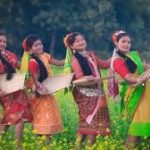
Kushan dance, also known as Kushan nritya or Kushan gaan, is a vibrant folk drama form from the Rajbongshi community that draws inspiration from the Krittivasi Ramayan. In this captivating performance, artists tell the story of the Ramayan using the Kamtapuri or Rajbongshi language, all set to beautiful musical verses. This unique form of folk theater dates back to the 15th century, when the Koch dynasty was in power over Assam, West Bengal, and parts of northern Bangladesh. The name “Kushan” comes from Kush, who was the second son of Sita.
During the performance, the men, referred to as sokra or chokra, sing and dance with great enthusiasm. The lead performer, known as mool or geedal, narrates the story, while the doari, acting as a jester, connects with the audience through humor, commentary, and observations. They incorporate various instruments, such as the bamboo-crafted bena, along with the aar banshi (bamboo flute), mondira, sarinja, akhrai, violin, and harmonium. The show begins with ashar bandana, a meaningful song that calls for the blessings of the divine.