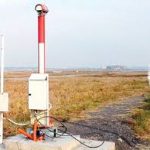
CSIR-National Aerospace Laboratories created the Drishti system, a visibility check on runways, to help pilots land and take off properly, mainly when the weather is not good.
Detailed explanation:
• Purpose:
Drishti measures the condition of the air, something important for pilots when figuring out the runway visual range (RVR).
• Development:
Its creation was led by CSIR-National Aerospace Laboratories (CSIR-NAL) and it is an “indigenous” technology built in India.
• Function:
The system can accurately measure how far you can see, from only 4 meters in fog to 10,000 meters in the open sky.
• Importance:
This equipment is required for all safe airport operations according to the guidelines of both the ICAO and the WMO.
• Applications:
The technology works at all types of airports, such as CAT I, CAT II, CAT III A & B.
• Deployment:
The system has been put in place at major airports in India, for instance at Indira Gandhi International Airport (IGI) in Delhi and Kempegowda International Airport (KIA) in Bangalore.
• Benefits:
Drishti is able to collect data under severe environmental conditions and puts out accurate visibility figures, even as fog, dust storms, or heavy rain make things difficult.
• Other Applications:
Besides using the airport application, Encardio Rite provides another system named Drishti, which is an important tool for collecting and operating with a lot of data.