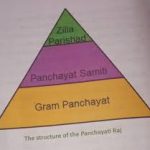
The Panchayati Raj System in India is a local self-governance system that operates at the village (gram), intermediate (block) levels, and district levels and was constitutionalized by the 73rd Constitutional Amendment Act, 1992 which was enforced on April 24, 1993. Incorporating Part IX into the Constitution entitled, “The Panchayats”, the amended Constitution has a newly devised Eleventh Schedule, stating the Powers, Authorities and Responsibilities of Panchayats.
Key Features and Principles of the Panchayati Raj System
- Three-Tier System: The Act provides for the three-tier system of Panchayats:
o Gram Panchayat (Village Level): One for a village or a group of villages.
o Panchayat Samiti (Intermediate Level/Block Level): One for a group of Gram Panchayats at Block level or Talukas level.
o Zila Parishad (District Level): One for the whole District. - Gram Sabha: The Gram Sabha is the fulcrum of the Panchayati Raj system at the village level. Gram Sabha refers to the collection of all adult members registered as voters in the Panchayat area. The Gram Sabha can:
o Approve the plans and budgets of the Gram Panchayat.
o Consider the annual report of the Gram Panchayat.
o Designate beneficiaries of various development schemes.
o Conduct social audit. - Regular Elections: The elections to all levels of Panchayats are held timely every five years.
- Reservation of Seats: The Act calls for reservation of seats for:
o Scheduled Castes (SCs) and Scheduled Tribes (STs) at the proportions of their population in the Panchayat area.
o At least one-third of the total number of seats for women at all levels.
o Reservation for Backward Classes (OBCs) can also be provided by the state legislatures. - State Finance Commission: The Constitution has made provisions for creating a State Finance Commission every five years to review the Panchayats to determine the financial situation of Panchayats. The State Finance Commission is to recommend to the Governor the principles for determining the:
o Distribution of taxes, duties, tolls and fees levied by the State, and the Panchayats.
o Grants in aid to the Panchayats from the Consolidated Fund of the State.
o Steps to be taken to improve the financial position of the Panchayats. - State Election Commission: The State Election Commission shall supervise, direct and control the preparation of electoral rolls for all elections and the conduct of all elections to the Panchayats.
- Powers and Functions: The Eleventh Schedule of the Constitution lists 29 subjects that can be devolved to the Panchayats by the State legislatures. These subjects broadly relate to:
- Agriculture, including agricultural extension.
- Land improvement, implementation of land reforms, land consolidation and soil conservation.
- Minor irrigation, water management and watershed development.
- Animal husbandry, dairying and poultry.
- Fisheries.
- Social forestry and farm forestry.
- Minor forest produce.
- Small scale industries, including food processing industries.
- Khadi, village and cottage industries.
- Rural housing.
- Drinking water.
- Fuel and fodder.
- Roads, culverts, bridges, ferries, waterways and other means of communication.
- Rural electrification, including distribution of electricity.
- Non-conventional energy sources.
- Poverty alleviation programme.
- Primary and secondary education.
- Technical training and vocational education.
- Adult and non-formal education.
- Libraries.
- Cultural activities.
- Markets and fairs.
- Health and sanitation, including primary health centres, health sub-centres and dispensaries.
- Family welfare.
- Women and child development.
- Social welfare, including welfare of the handicapped and mentally retarded.
- Welfare of the weaker sections, and in particular, of the Scheduled Castes and the Scheduled Tribes.
- Public distribution system.
- Maintenance of community assets.
- Planning and Implementation: Panchayats can prepare Plans for economic development and social justice, and implement schemes related to the subjects, which have been devolved to them.
Panchayati Raj in Assam:
Assam has adopted the three-tier Panchayati Raj system in accordance with the 73rd Constitutional Amendment Act. The structure in Assam is:
- Gaon Panchayat (Village Level): Covering a village or a group of villages.
- Anchalik Panchayat (Intermediate Level/Block Level): For a development block.
- Zila Parishad (District Level): For the entire district.