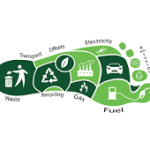
A carbon footprint measures all the greenhouse gas (GHG) emissions measured in CO2 equivalents, either directly or indirectly, by an individual, organization, product, or activity that contribute to climate change.
What it is:
• Greenhouse Gas Emissions:
A carbon footprint is a measure of the amount of GHGs released into the atmosphere, mostly carbon dioxide (CO2) plus methane, nitrous oxide and other GHGs.
• Direct and Indirect Emissions:
The carbon footprint includes both direct emissions (e.g., burning fossil fuel for transportation or heating) and for indirect emissions (e.g., energy to produce goods and services).
• CO2 Equivalents:
Different GHGs differ in warming potential so they are expressed as CO2 equivalents for ease of comparison.
• Scope:
A carbon footprint can be calculated at any level, including an individual person, business (small or large), product (food or drink), event (festival, tournament, etc), or entire country.
Why it matters:
• Climate Change:
GHG emissions are the primary driver of climate change resulting in global warming, changing weather patterns, and extreme weather events, as well as additional environmental impacts.
• Sustainability:
Understanding your carbon footprint and reducing your carbon footprint is essential for sustainable, long-term operations, and reducing climate change.
• Informed Decision Making:
Carbon footprint assessments show individuals and organizations how their consumption, production, and energy use impacts the environment, to help individuals make informed decisions.
• Comparison:
Carbon footprints help compare the environmental impact from various activities, products, or organizations, to improve environmental efficiencies.