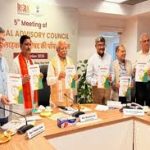
Union Minister for Housing and Urban Affairs, Shri Manohar Lal, recently launched Angikaar 2025, an outreach and awareness campaign under the Pradhan Mantri Awas Yojana – Urban 2.0 (PMAY-U 2.0). This initiative was launched during a ceremony in New Delhi, with the goal of closing the last-mile gap in urban housing delivery while also boosting awareness and encouraging community involvement in housing schemes.
The campaign aims not just to speed up the completion of houses under the scheme but also to spread the word about the new and existing benefits available to urban residents throughout India.
So, what exactly is Angikaar 2025?
Angikaar 2025 is a two-month national campaign running from September 4th to October 31st, 2025, designed to enhance visibility and outreach for PMAY-U 2.0. It focuses on:
• Raising awareness about the revamped PMAY-U 2.0 scheme.
• Accelerating application verification and helping to complete sanctioned houses.
• Informing beneficiaries about related schemes like the Credit Risk Guarantee Fund Trust for Low Income Housing (CRGFTLIH) and PM Surya Ghar: Muft Bijli Yojana.
• Prioritizing vulnerable groups under the Special Focus Group (SFG) category.
This campaign is being rolled out across more than 5,000 Urban Local Bodies (ULBs) through door-to-door outreach, community events, and loan melas, ensuring that every eligible beneficiary gets the support they need.
Progress of PMAY-U and PMAY-U 2.0
Since the launch of PMAY-U, the mission has sanctioned 120 lakh houses, out of which 94.11 lakh pucca houses have been completed and delivered to beneficiaries. Angikaar 2025 is expected to drive momentum to finish the remaining homes and enroll one crore additional urban families under PMAY-U 2.0, each eligible for ₹2.5 lakh in financial assistance to build or buy pucca houses in cities.
Why Angikaar 2025 Matters
This campaign plays a critical role in,
- Bridging the implementation gap by creating awareness at the grassroots level.
- Ensuring efficient convergence with other welfare schemes for maximum impact.
- Empowering vulnerable and low-income urban populations with knowledge and access to housing rights.
- Building a sense of ownership and participation among beneficiaries through Jan Bhagidari.
- It reaffirms the government’s commitment to the goal of ‘Housing for All’, not just in policy, but in practice.