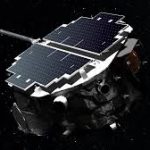
The Interstellar Mapping and Acceleration Probe, or IMAP, or IMAP, is a new mission that will map the boundaries of our heliosphere. The heliosphere is a huge bubble created by the Sun’s wind that encapsulates our entire solar system.
About the Heliosphere
The heliosphere is formed by the solar wind, which is a steady stream of charged particles flowing from the sun. This protective bubble shields our planets from harmful cosmic rays and interstellar particles. Even though it plays such a crucial role, we still don’t fully understand the structure and boundaries of the heliosphere. IMAP seeks to map these boundaries and study how the solar wind interacts with the space beyond the solar system.
IMAP’s Scientific Instruments
IMAP is equipped with 10 specialized instruments. Among these are energetic neutral-atom detectors (IMAP-Lo, IMAP-Hi, IMAP-Ultra) that capture neutral atoms created when charged ions pick up electrons. Additionally, there are sensors that measure charged particles, magnetic fields, solar wind structures, and interstellar dust. Together, these instruments offer a detailed perspective on the environment of the heliosphere.
Mission Orbit and Operations
The IMAP mission will additionally support real-time observations of the solar wind, which can flood the near-Earth space environment with dangerous particles and radiation that could harm technology and astronauts in space and disrupt global communications and electrical grids on Earth. The IMAP spacecraft is situated at the first Earth-Sun Lagrange point (L1), at around one million miles from Earth toward the Sun. There, it can provide about a half hour’s warning to voyaging astronauts and spacecraft near Earth of harmful radiation coming their way.