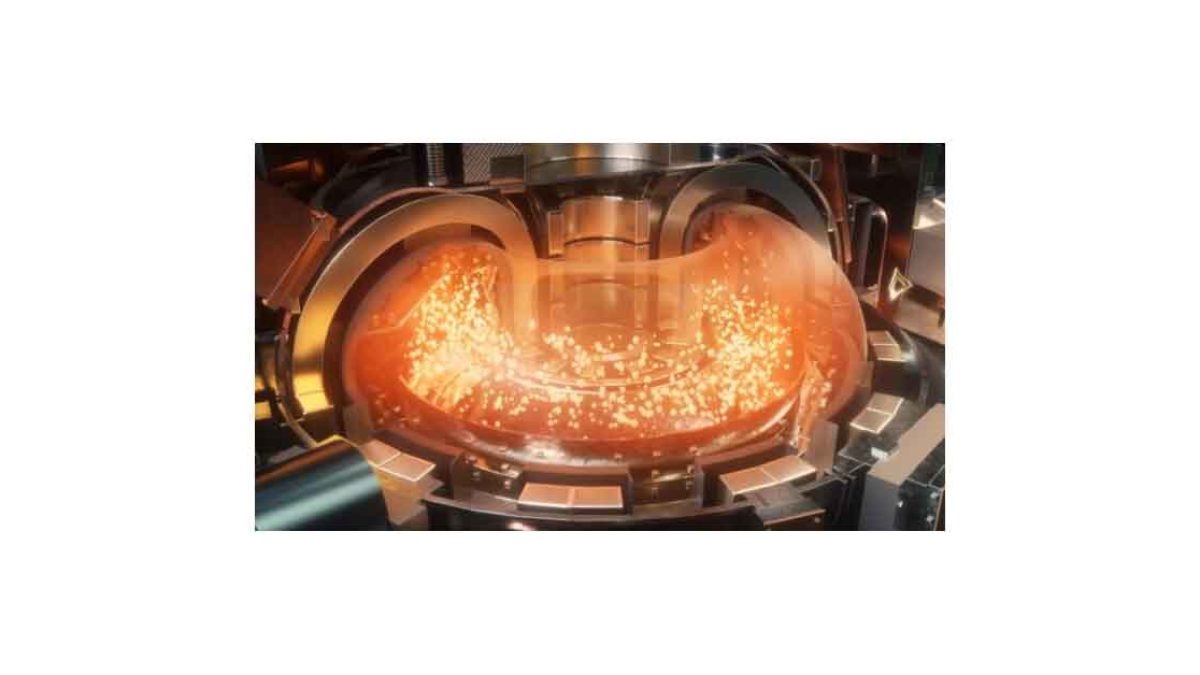
The Greenwald limit refers to the theoretical upper bound on plasma density in a tokamak-based fusion reactor. If plasma density exceeds this limit, the confined plasma becomes unstable, leading to turbulence and eventual collapse of the fusion reaction.
Why it is important?
- Fusion reactions require very high plasma density, temperature, and confinement time.
- The Greenwald limit has long been a major bottleneck, preventing reactors from packing enough fuel to reach self-sustaining fusion (ignition).
Key Aspects of the Greenwald Limit:
- Definition & Formula: Proposed by Martin Greenwald in 1988, it sets a ceiling on density, limiting the “fuel” available for fusion to avoid destabilizing the tokamak.
- Impact on Fusion: Higher density is required for better fusion performance (higher reaction rates, energy output).
- Consequences of Exceeding: Surpassing this limit historically leads to, at best, a degradation of confinement (turbulence) and, at worst, sudden plasma termination and, potentially, damage to the reactor walls.
- Limits to Performance: It is a major design constraint, as it dictates that higher-density reactors need higher current (requiring larger, more powerful magnets)
Achievement & Significance:
- China’s EAST reactor achieved 1.3–1.65 times the Greenwald limit while maintaining stability.
- Done by cooling the divertor and reducing tungsten impurities, allowing cleaner, denser plasma.
- Confirms Plasma–Wall Self-Organisation (PWSO) theory, proving a new “density-free” operating regime.