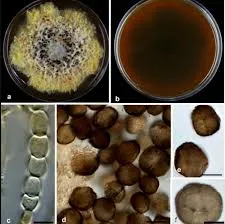
Researchers at Banaras Hindu University (BHU) in Varanasi have made an important discovery in the field of plant pathology. They have identified a new species of phytopathogenic fungus, Epicoccum indicum, which is responsible for leaf spot disease in Chrysopogon zizanioides (vetiver). This finding is crucial for agricultural research, as vetiver is widely used for medicinal and environmental purposes.
A research team led by Senior Assistant Professor Raghvendra Singh and research scholar Soumyadeep Rajwar classified this new species through morpho-cultural characteristics and multigene molecular phylogenetic analysis. Their study was published in the esteemed journal Fungal Diversity on December 19, 2024, marking another achievement for BHU in the realm of fungal biodiversity research.
How Does This Relate to Past Discoveries?
BHU has been at the forefront of mycological research in recent years. In November 2022, its scientists, working alongside the Agharkar Research Institute and the Kerala Forest Research Institute, identified a new fungal genus called Neokamalomyces indicus, found on banyan tree leaves. Researchers are currently exploring this fungus for its potential applications in antibiotics and cancer therapies.
In January 2024, BHU researchers also identified a new rust fungus family, Nyssopsoraceae, found on Toona sinensis leaves in Uttarakhand. Rust fungi are known to cause severe damage to agriculture, horticulture, and forestry, making this an important breakthrough for plant disease control .