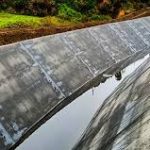
Canal lining involves putting a protective layer on the bed and sides of a canal using materials that are either impermeable or semi-permeable. This technique helps minimize water loss, prevents erosion, and enhances the efficiency of water flow.
Purpose of Canal Lining:
Prevents Seepage: Reduces water loss through percolation into the ground.
Increases Efficiency: Enhances water flow by reducing resistance.
Prevents Erosion: Protects canal walls from collapsing.
Reduces Maintenance Costs: Minimizes siltation and weed growth.
Improves Water Quality: Prevents contamination from surrounding soil.
Types of Canal Lining:
- Concrete Lining – Durable, effective in preventing seepage.
- Brick or Stone Masonry Lining – Provides strength and stability.
- Compacted Earth Lining – A low-cost alternative, but less effective.
- Plastic or Geo-membrane Lining – Flexible, cost-effective, and widely used.
- Clay Lining – Natural and eco-friendly, but requires maintenance.