

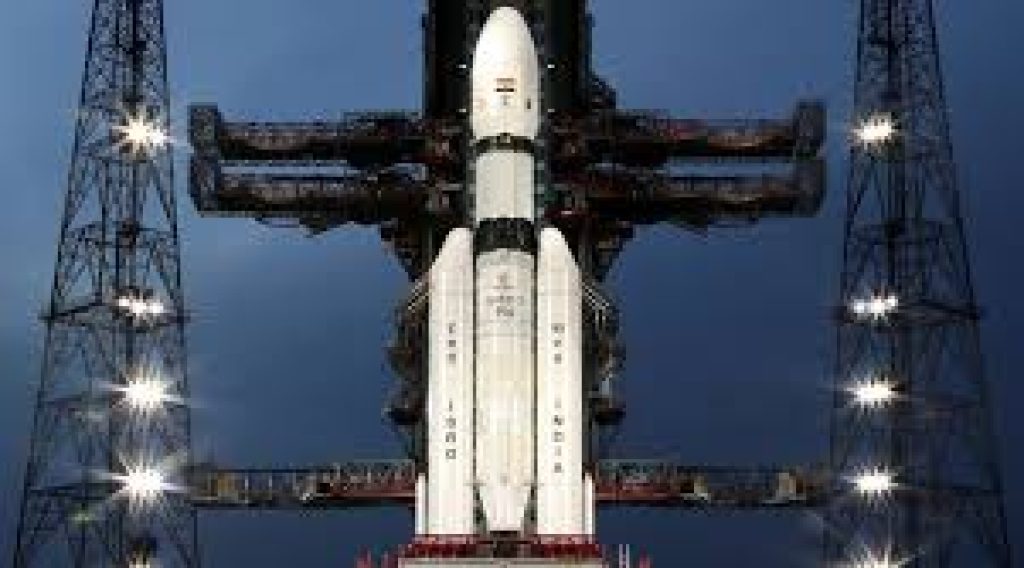
Chandrayaan-3 is India’s third mission to explore the Moon, developed by the Indian Space Research Organisation (ISRO). It made history by successfully landing on the Moon, positioning India as the first country to reach the Moon’s south pole.
Mission Timeline:
- Launch Date: July 14, 2023
- Launch Vehicle: LVM3-M4 (formerly GSLV Mk III)
- Landing Date: August 23, 2023
- Mission Duration: 14 Earth days (equivalent to 1 lunar day)
Mission Objectives:
- Soft Landing: Successfully land a spacecraft on the Moon’s south pole region.
- Rover Deployment: Deploy the Pragyan rover to study the lunar surface.
- Scientific Experiments: Conduct in-situ chemical analysis and collect data on the Moon’s surface.
Key Components:
- Vikram Lander:
- Designed for a soft landing.
- Carried scientific instruments to analyze lunar seismic activity and thermal properties.
- Pragyan Rover:
- A six-wheeled robotic rover that conducted chemical analysis and captured high-resolution images.
- Powered by solar energy and equipped with tools like the Laser-Induced Breakdown Spectroscope (LIBS) and Alpha Particle X-ray Spectrometer (APXS).
- Propulsion Module:
- Provided orbit-raising maneuvers and carried the lander-rover configuration to lunar orbit.
- Carried the Spectro-polarimetry of Habitable Planet Earth (SHAPE) payload to study Earth’s atmosphere.
Historic Achievements:
First Country to Land on the South Pole:
- Landed near the Moon’s south pole, an area with potential water ice reserves, making India the fourth nation to achieve a soft landing after the USA, Russia, and China.
Pragyan Rover Exploration:
- Conducted in-situ analysis of the lunar surface, detecting elements like sulfur, aluminum, and iron.
Scientific Breakthroughs:
- Provided valuable data that will aid future lunar missions and potential colonization plans.
Scientific Discoveries:
- Detection of Sulfur: Confirmed the presence of sulfur in the lunar soil, supporting theories about volcanic activity and water ice reserves.
- Temperature Data: Measured the temperature profile of the Moon’s surface, contributing to understanding lunar thermal dynamics.
Challenges Overcome:
- Complex navigation and precision landing on the uneven terrain of the Moon’s south pole.
- Coordination of lander and rover operations in harsh lunar conditions.
Future Prospects:
Chandrayaan-3 has gathered data that will play a crucial role in supporting India’s upcoming lunar and planetary missions. This progress has enhanced India’s position in the global space race and created more opportunities for collaboration on an international scale.
Pride Moment for India:
Chandrayaan-3’s success placed India at the forefront of space exploration and showcased ISRO’s growing expertise in planetary exploration.