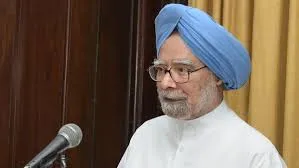
Dr.Manmohan Singh, formerPrime Minister of India,retirefrom theRajya Sabha, marking the end of histhree-decade-long tenurein theUpper House.
About Manmohan Singh
- Born onSeptember 26, 1932.
- Atwo-term Prime Minister of Indiafrom2004 to 2014.
- Aneconomist,academician,bureaucrat, andpolitician.
- Played asignificant roleinshaping India’s economy.
- Served as theGovernor of the Reserve Bank of Indiafrom1982 to 1985.
- Minister of FinanceinP.V. Narasimha Rao’s government.
- Creditedfor introducingsignificant economic reformsin India in1991.
Major Policies of Manmohan Singh
Economic Liberalisation (1991)
- Initiatedreformsthatreduced trade barriers,dismantled the License Raj system, andopened up key sectors to foreign investment.
- Crucial injumpstarting India’s economic growthandglobalization.
National Rural Employment Guarantee Act (NREGA) (2005)
- Introduced to offer alegal guarantee of a minimum of 100 days of employment per yeartorural households.
- Objective:Address rural poverty and unemployment.
Right to Information Act (RTI) (2005)
- Empowered Indian citizens todemand information from government agencies and institutions.
- Promotedtransparency,accountability, andprevented corruptionin public administration.
The Indo-US Civil Nuclear Agreement (2005)
- Allowed India to receivenuclear technology and fuelfor itscivilian nuclear energy program.
- A significant milestone in therelationship between India and the United States.
Retirement of Rajya Sabha Members
- Article 80 of the Constitution sets themaximum number of Rajya Sabha members at 250.
- 238 membersrepresent states and Union Territories.
- 12 membersarenominated by the Presidentfor their expertise in areas like literature, science, art, and social service.
- Rajya Sabha is apermanent House, andone-third of its members retire every two years.
- Members serve for afull term of six years.