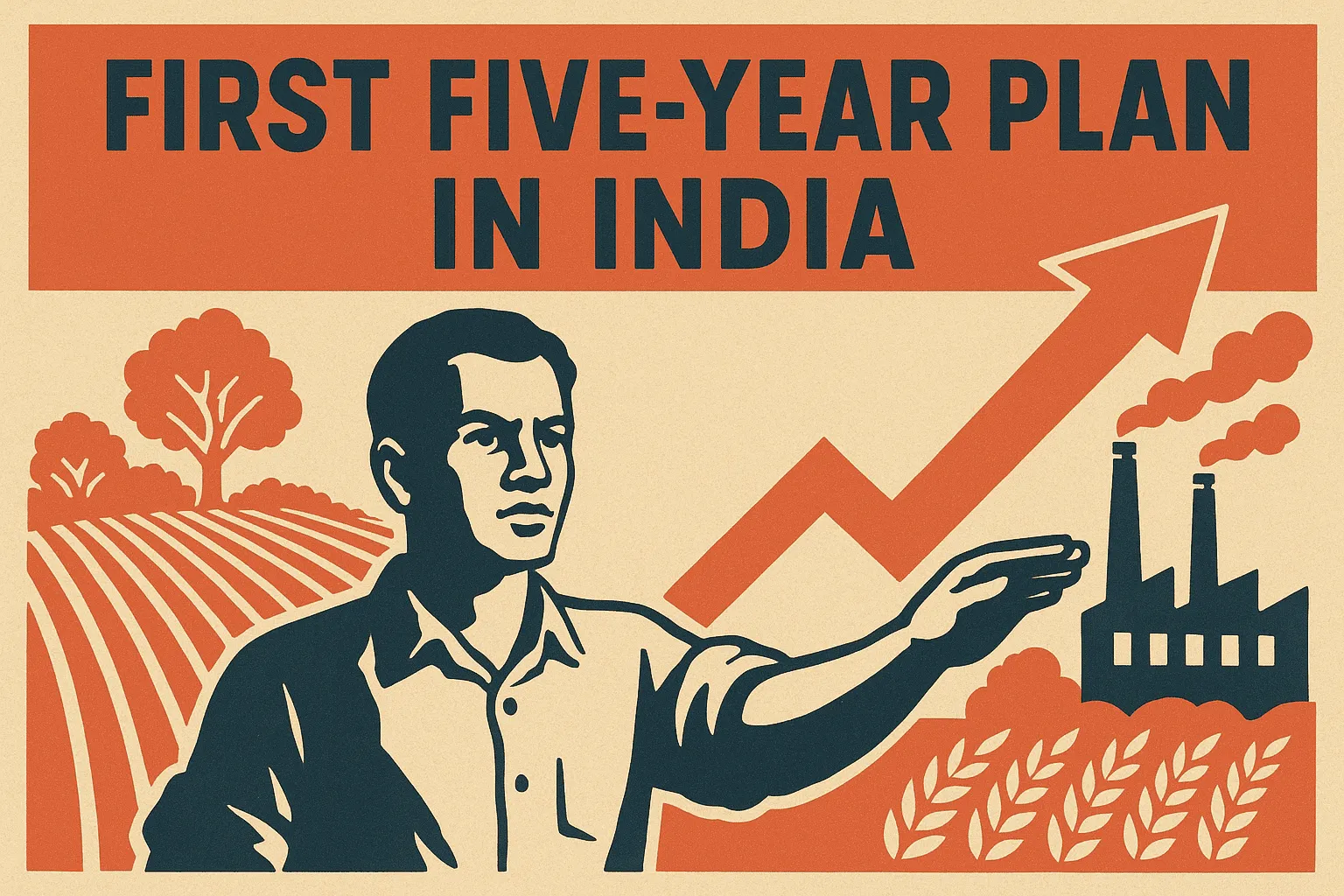
The First Five-Year Plan was led by Pandit Jawaharlal Nehru in India, from 1951 to 1956, with a focus on developing agriculture and, thus, focusing on improving the primary sector given that the Indian economy was often influenced by agriculture. The goal was to improve the overall economic conditions of India as a focus on agriculture was vital to India’s economic progress. The First Five-Year plan was successful and was able to achieve a growth rate of 3.6% when the original target growth rate at the beginning of the Plan was only 2.1%.
Key highlights:
- Increasing Agricultural Development: The plan focused extremely heavily on developing agricultural productivity, the aim being that India becomes self-sufficient in food production.
- Rehabilitation of Refugees: With the influx and burden of refugees from Pakistan, this was the plan’s second largest objective.
- Control of Prices: The Third objective was to keep inflation under control, as price stability was/is important for the economy
- Infrastructure Development: The development of the infrastructure i.e. power and transportation
- The plan aimed to achieve 2.1 % GDP growth that year but ended up growing up to 3.6 %. This success in the initiation of the plan made India believe in it. The first five-year plan wanted to make sure that India becomes self-sufficient, economically strong and thrives in its primary sectors of growth.
Underlying Principles: - Harrod-Domar Model:
The plan is based on the Harrod-Domar model, which is a Keynesian model of economic growth that focused on savings and investment. - Keynesian Economics:
The plan drew heavily on Keynesian philosophy on economic development, this meant that government intervention was the “norm” in regards to the overall economy.
Key Takeaways: - The first five-year plan established a physical structure for India’s planned economic development, as well as completing the model successfully.
- The first five-year plan was successful as a planned programme. This effort demonstrated the validity of planned economic development.
- The plan’s focus on agriculture and infrastructure laid the groundwork for future development efforts.