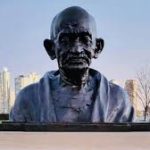
As India prepares to commemorate the 155th birth anniversary of Mohandas Karamchand Gandhi, commonly known as Mahatma Gandhi, the significance of Gandhi Jayanti resonates not just throughout the nation but across the globe. Observed annually on October 2nd, this national holiday serves as a profound reminder of the enduring legacy of the man fondly referred to as the ‘Father of the Nation’.
Historical Context: The Life of Mahatma Gandhi
Early Years and Education
Born on October 2, 1869, in Porbandar, a coastal town in the western Indian state of Gujarat, Mohandas Karamchand Gandhi’s journey from a modest beginning to becoming a global icon of peace is a testament to the power of unwavering principles. His educational pursuit led him to University College London, where he studied law, laying the foundation for his future role as both a legal practitioner and a champion of justice.
South African Experience
Gandhi’s transformative years in South Africa proved pivotal in shaping his philosophy. Confronted with racial discrimination, he developed his revolutionary concept of Satyagraha – non-violent resistance. This philosophy, rooted in truth and peaceful protest, would later become the cornerstone of India’s independence movement.
Return to India and the Independence Movement
Upon returning to India, Gandhi revolutionized the Indian independence struggle by:
- Introducing the concept of non-violent resistance on a mass scale
- Organizing the historic Salt March, challenging British salt monopoly
- Launching the Non-Cooperation Movement, encouraging Indians to boycott British goods and institutions
His methods proved remarkably effective, mobilizing millions of Indians across social, economic, and religious divides to unite in the quest for independence. On August 15, 1947, India achieved independence, largely due to Gandhi’s leadership and the collective efforts of his followers.
Significance of Gandhi Jayanti
A Day of National Importance
Gandhi Jayanti transcends being merely a holiday; it represents a day of national reflection and commitment to Gandhian principles:
- Truth (Satya)
- Non-violence (Ahimsa)
- Peace (Shanti)
Global Recognition
The United Nations, recognizing the universal relevance of Gandhi’s teachings, has declared October 2nd as the International Day of Non-Violence. This global observance underscores the continuing relevance of Gandhian philosophy in addressing contemporary conflicts and challenges.