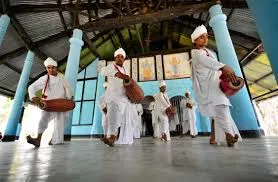
Gayan bayan is a traditional religious music and dance performance in Assam, India and is significantly associated with the Sattriya tradition of Vaishnavism. It consists of singers (gayan) and drummers (bayan), and uses instruments such as khols or cymbals, to perform devotional songs and dances. These performances are specifically located in the context of rituals and ceremonies in Vaishnava satras (Vaishnava religious monasteries).
key details:
- “Gayan” means singing and vocal music.
- “Bayan” means drummers that play instruments such as khols (drums) and cymbals (taal).
- Gayan bayan performances are an essential part of the Sattriya cultural tradition in Assam.
- Gayan bayan performances are often performed in satras (monasteries) for various occasions related to worship and devotion.
- The instruments used, especially khols and cymbals, lend themselves to the rhythmic and melodic features of the performances.
- Gayan bayan derives from the Vaishnava tradition and can be traced back to the teachings of the 15th-century religious reformer, Sankardeva.
- Gayan bayan performances can differ slightly depending on the specific satra or sect.