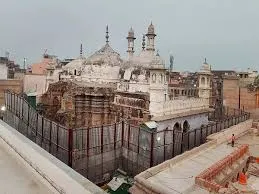
The Gyanvapi Mosque is a historic site nestled in Varanasi, Uttar Pradesh, India, right next to the Kashi Vishwanath Temple, which is one of the most sacred Hindu temples. This mosque has been at the heart of a long-standing conflict between Hindu and Muslim communities.
Historical Background
The construction of the mosque is said to date back to 1669, during the reign of Mughal Emperor Aurangzeb, and it’s claimed that this happened after a section of the original Kashi Vishwanath Temple was destroyed. The name “Gyanvapi” means “Well of Knowledge,” which refers to the Gyanvapi Well situated in the mosque complex. Hindu groups claim that the mosque was built over a Hindu temple, while Muslim groups assert its continuous use as a mosque since Aurangzeb’s era.
Controversy and Legal Battle
In recent years, Hindu petitioners have been asking for the right to worship inside the mosque, arguing that remnants of the original temple, including a shivling (a symbolic representation of Lord Shiva), can be found within the mosque complex. In 2022, a court-ordered survey took place, where the Hindu side claimed to have discovered a shivling in the Wuzukhana (ablution area), while the Muslim side contended it was just a fountain. The case is currently making its way through the Indian courts, with ongoing discussions about whether prayers should be permitted inside the mosque and if it holds legal protection as a religious site.
Current Status
- In January 2024, the Allahabad High Court ruled that Hindu worship could take place in a section of the mosque.
- The case is still under litigation, with ongoing legal and political debates.