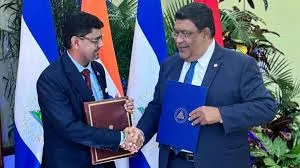
In a major step toward strengthening bilateral relations, India and Nicaragua have signed a Memorandum of Understanding (MoU) to implement Quick Impact Projects (QIPs). This agreement, formalized in Managua, Nicaragua, was signed by Indian Ambassador Sumit Seth and Nicaraguan Foreign Minister Valdrack Jaentschke. The partnership seeks to improve both physical and social infrastructure in Nicaragua, delivering direct and tangible benefits to local communities.
Under this MoU, India will offer grant assistance for a range of Quick Impact Projects. The main emphasis will be on enhancing physical infrastructure, including roads, community centers, and essential utilities. Furthermore, social infrastructure projects will aim to bolster education, healthcare, and sanitation. These initiatives are intended to bring about immediate enhancements in people’s daily lives by tackling urgent needs in essential services.
According to reports,the implementation of these projects will be swift, ensuringmaximum impact in a short period. This strategy aligns with India’s broaderdevelopment cooperation approach, which emphasizeshigh-impact, small-scale projectsthat bring rapid and visible change in partner countries.
How Does This Agreement Align with India’s Global Development Strategy?
India has been working to strengthen its development partnerships with various countries, especially in Latin America, Africa, and Southeast Asia. The signing of this MoU with Nicaragua is a key part of a broader initiative to assist developing nations through Quick Impact Projects.
In December 2024,India signed a similar agreement with Nicaragua, focusing onsocio-economic development initiatives. Such collaborations highlight India’scommitment to global developmentthroughtargeted and effective projectsthatbenefit local communities.
By implementinghigh-impact projects in a short timeframe, India continues to position itself as areliable partner in international development. These projects not only helpimprove living standards in partner countriesbut alsoenhance India’s global standing as a development-focused nation.