

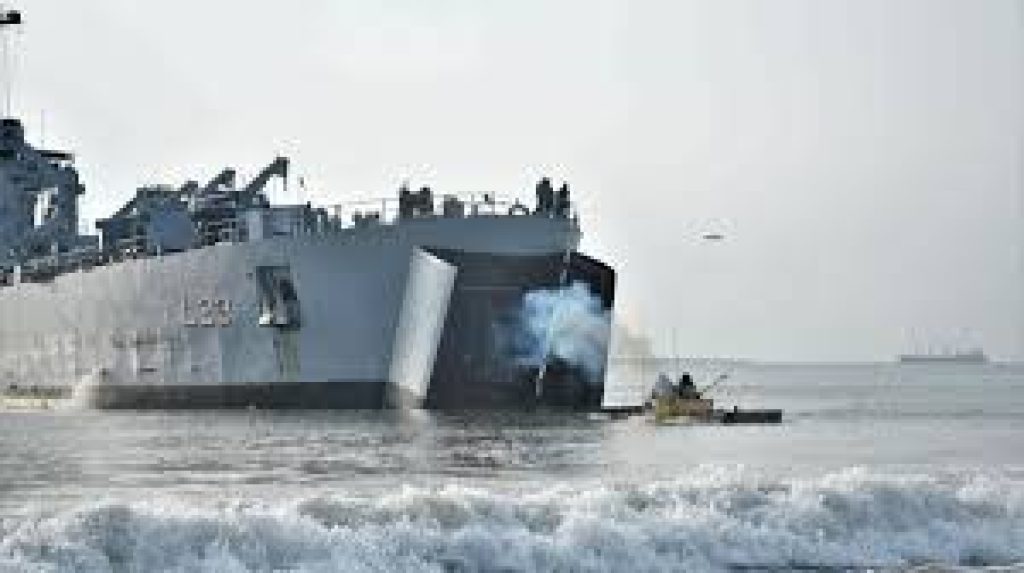
The Indian Navy successfully completed the biannual joint exercise, ‘Jal Prahar 2025,’ in collaboration with the Indian Army. Taking place along India’s eastern coast, this exercise was all about boosting teamwork and operational readiness in amphibious warfare. Spanning from September 16 to 23, 2025, it showcased impressive coordination and tactical skills between the naval and land forces.
Overview of Jal Prahar 2025
Jal Prahar is a significant amphibious exercise that happens every two years, bringing together the Indian Navy and Army. The 2025 edition zeroed in on joint operational planning and execution along India’s eastern seaboard. This exercise was a real test of both forces’ abilities to carry out complex amphibious operations, including landing troops from the sea to the shore under realistic conditions.
Harbour Phase Activities
The Harbour Phase at Visakhapatnam focused on the induction and integration of army troops onboard INS Gharial. The activities included onboard training, safety briefings, and orientation sessions to help soldiers get accustomed to life at sea. To foster camaraderie and teamwork, various sports and interaction events were also organized.
Sea Phase Execution
From September 21 to 23, the Sea Phase took place near Kakinada. This part of the exercise involved real amphibious operations, such as hard beaching of the ship, launching Landing Craft Assault (LCA) vessels, and deploying BMP amphibious infantry fighting vehicles. The exercise was a great way to validate Standard Operating Procedures (SOPs) and joint training protocols, ensuring everything runs smoothly during actual combat scenarios.
Significance of Inter-Service Synergy
Jal Prahar 2025 highlighted just how crucial interoperability is between the Navy and Army. Effective communication and joint planning were key to achieving operational success. The exercise deepened the mutual understanding of each service’s strengths and weaknesses, paving the way for a more unified approach to amphibious warfare.
Technological and Tactical Enhancements
The exercise showcased the use of modern amphibious platforms like the INS Gharial and LCAs. It also tested the integration of mechanised infantry vehicles in beach landing operations. Such drills help refine tactics, improve coordination, and adapt to emerging maritime threats. Continuous evolution of joint SOPs ensures preparedness for future amphibious missions.