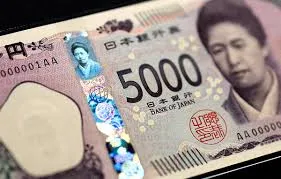
On July 3, Japan will introduce new banknotes featuring what it claims to be the world’s pioneering use of advanced holography. This technology creates the illusion of historic figures’ portraits rotating in 3D on the bills, serving as a key anti-counterfeit measure. This marks the first redesign of the banknotes in 20 years.
New series of banknotes
Japanis set to unveil anew series of banknotes,marking thefirst significant redesign in two decades.This update to the¥10,000, ¥5,000, and ¥1,000 notesincorporatesadvanced anti-counterfeiting technologiesand features prominent historical figures. Since the country issued itsfirst banknote in 1885,there have been53 different designs. This latest update, effective from July 3, comes as a measure to enhance security and usability amid evolving technological advancements.
What are the new features of the redesigned banknotes?
The upcoming banknotes introduce several innovative features equipped with advanced security featuresto prevent counterfeiting.One of the most notable advancements is the incorporation ofcutting-edge holographic technology,which creates a three-dimensional effect. These include:
- Three-dimensional holographic stripeson the ¥10,000 and ¥5,000 notes that display the portraits from different angles when tilted. The¥1,000 billalso includes a similar holographic patch at the bottom left corner.
- Enlarged Arabic numeralsreplacing the previous kanji characters for easier recognition of the face value by people of all ages and nationalities.
- Tactile marksto help visually impaired individuals identify the denominations by touch.
- Intaglio printing and watermarksfor enhanced authenticity.
In a groundbreaking move,Japanclaims to be thefirst countryto utilise holography that creates a3D rotating effecton the portraits, significantly elevating the notes’ security features. These features are part ofJapan’s ongoing effortsto combat counterfeiting, which, despite a significant decline in recent years, remains a concern. In2020, there were2,693 counterfeit casesreported, whereas only681cases were reported in2023.
Who are the historical figures featured on the new banknotes?
The new banknotes will prominently feature three influential figures from Japanese history, each chosen for their significant contributions to the nation.
About ¥10,000 note
The¥10,000 notewill featureEiichi Shibusawa (1840-1931), known as the“father of Japanese capitalism.”Shibusawa played a pivotal role in the modernisation of Japan’s economy during theMeiji Era.He was instrumental in establishing theFirst National Bank in 1873andfounded over 500 companies,including notable names like Sapporo Brewery and Tokyo’s Imperial Hotel. On the back of the ¥10,000 note, the iconic red-brick building ofTokyo Station’s Marunouchi Buildingis depicted,symbolisingthe progress andmodernisationShibusawa championed.
About ¥5,000 note
Umeko Tsuda (1864-1929)will grace the¥5,000 note.Tsudawas a pioneering educator who dedicated her life to improving educational opportunities for women. After studying in the United States, she founded Tsuda University, which remains one of Japan’s most prestigious institutions for women. The reverse side of the ¥5,000 note featuresJapanese wisteria flowers, a symbol of the beauty and persistence of Tsuda’s efforts to uplift women’s status in Japanese society.
¥1,000 note
The¥1,000 notewill honourShibasaburo Kitasato (1853-1931), a celebrated bacteriologist known for his contributions to modern medicine. Kitasato co-discovered an antitoxin for diphtheria and was a key figure in the early development of Japanese medical science. The back of the ¥1,000 note showcases“The Great Wave off Kanagawa”, a famous woodblock print by ukiyo-e artist Katsushika Hokusai, symbolising Kitasato’s impact on global science and medicine.
How will the new banknotes be made available?
Thenew banknoteswill be made available starting Wednesday,July 3, 2024. Initially, they will be distributed to financial institutions, which will then make them available to the public throughATMsand cashier windows. By theend of March 2025,nearly7.5 billionnew banknotes are expected to be in circulation, with a total of 5 billion banknotes prepared by the end of March2024. The old banknotes will remain valid for transactions even as the new ones enter circulation.