

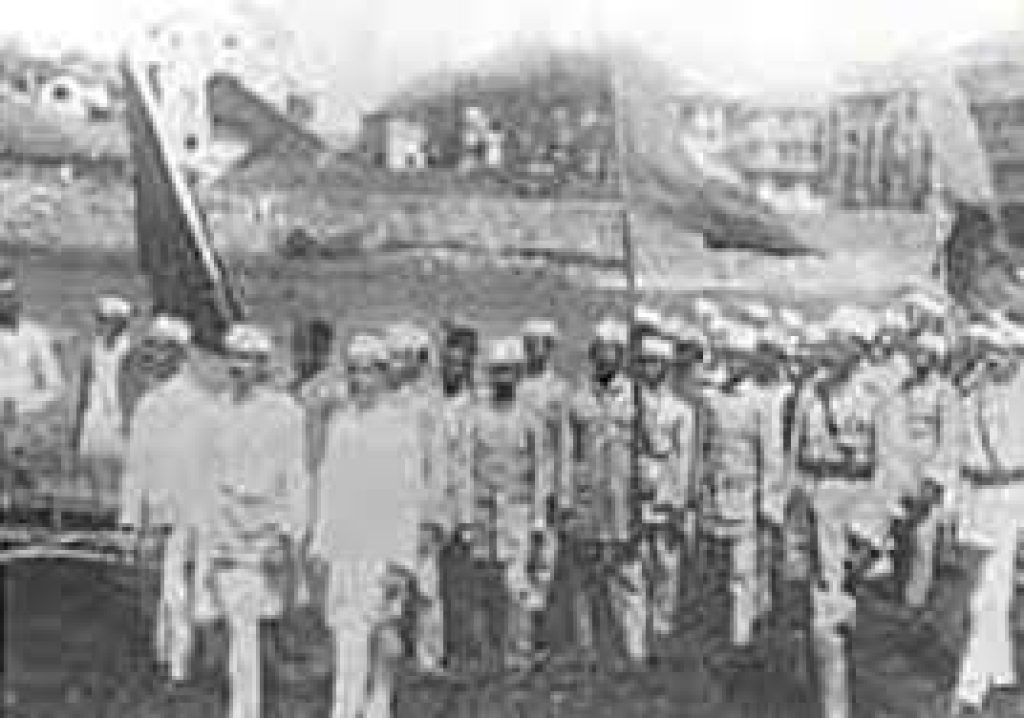
From 1919 to 1924, Indian Muslims used the Khilafat Movement to stage a pan-Islamic political protest campaign in British India. It was mostly formed to keep the Ottoman Caliphate as an emblem of unity for Muslims everywhere and to oppose British actions aimed at ruining the Ottoman Empire following its loss in World War I.
Causes of the Khilafat Movement:
• Concern for the Caliphate: All Sunni Muslim communities worldwide considered the Ottoman Sultan to be their Caliph, leader in both religious and political matters. After World War I, Indian Muslims were worried about what might happen to the Ottoman Empire and the Caliphate when the Allied forces wanted to split it. They considered this to be a major offense to what they believed and believed it might threaten Muslims’ unity.
• Fear for Holy Places: Because the Ottomans governed Mecca and Medina and Indian Muslims were deeply concerned, the fate of these places was always on their minds. Many Muslims thought that if the Ottoman Empire became less powerful, Muslims might no longer protect these sites.
• Betrayal by the British: A lot of Indian Muslims believed that the British government did them wrong. Throughout World War I, they backed the British and it was agreed that Islamic interests would be protected after the war ended. But after the war, the situation moved in the other direction.
• Pan-Islamic Sentiments: People in the movement were motivated by a stronger feeling that all Muslims were part of one family. They formed a close relationship with other Muslims in Turkey.
• Leadership of the Ali Brothers: This movement was put together by Muslim leaders, most notably the Ali brothers, together with leaders Hakim Ajmal Khan and Maulana Abul Kalam Azad. What they said and the actions they took highly inspired the Muslim community.
• Mahatma Gandhi’s Support: Mahatma Gandhi used the Khilafat issue to help Hindus and Muslims partner in fighting against the British. He thought that Muslims backing the cause of the Khilafat would join the Indian nationalist cause and strengthen the struggle for Swaraj. In addition, the Indian National Congress gave its backing to the movement.
Course of the Movement:
• Formation of the Khilafat Committee: The All India Khilafat Committee was formed in 1919 to take charge of the movement.
• Mass Mobilization: The campaign became stronger with public meetings, rallies and protests held all over India.
• Non-Cooperation Movement: The Non-Cooperation Movement founded by Mahatma Gandhi was joined by the Khilafat Movement in 1920 to fight the British government. At that time, Hindu and Muslim people worked as a unit to boycott government offices, imported goods and practiced other types of civil disobedience.
• Hijrat Movement: A number of radical Khilafat leaders urged Muslims to move from British India to Afghanistan, since they regarded India as a place of war. Still, this movement only had limited results.
• Moplah Rebellion: The rebellion of Muslim peasants in Malabar in 1921, over issues with the Khilafat, caused separating issues between Hindus and Muslims.
Decline of the Khilafat Movement:
The movement was weakened by a number of different reasons.
• Ending the Caliphate in Turkey. The women’s liberation movement was dealt its worst blow by Turkey. In that year, Mustafa Kemal Atatürk and the National Assembly removed the Ottoman Sultanate. They further acted in 1924 and removed the Caliphate, creating a secular Turkish Republic instead. This removed the reason behind the protests of Indian Muslims.
• Withdrawal of the Non-Cooperation Movement: During the Chauri Chaura incident, a mob killed policemen, so the Non-Cooperation Movement was discontinued by Mahatma Gandhi. This weakened the movement which had strong ties to it.
• Internal Divisions: Eventually, initial bonding between Hindus and Muslims started to decline thanks to the Moplah Rebellion and various political differences. A number of Muslims began concentrating on their specific political rights and created groups like the Muslim League.
• Arrest of Leaders: Arresting major leaders in the movement made it harder for Khilafat to stay united.
Significance of the Khilafat Movement:
• Hindu-Muslim Unity: For the first time, Hindus and Muslims fought together energetically during the Khilafat Movement to challenge British rule. It illustrated that there was a chance for everyone to get along in the nationalist movement.
• Mass Mobilization: This had the effect of gathering large numbers of Muslims into nationalist efforts for the first time.
• Foundation for Future Movements: How the Khilafat-Non-Cooperation Movement avoided cooperating with the British inspired later phases of the Indian independence struggle.
• Raised Political Consciousness: It helped Indian Muslim communities grow more aware of issues happening across the country and around the globe.