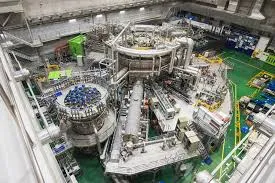
Scientists in South Korea have set a new world record using theKorea Superconducting Tokamak Advanced Research (KSTAR)device, an “artificial sun”nuclear fusion reactor. During tests conducted between December 2023 and February 2024, they generatedplasma temperatures of 100 million degrees Celsiusfor a duration of48 seconds.
Unprecedented Temperatures
The achieved temperature of 100 million degrees Celsius is a remarkableseven times hotter than the Sun’s core, which has a temperature of approximately 15 million degrees Celsius.
The Quest for Fusion Energy
Nuclear fusionaims to replicate the reaction that powers the Sun and other stars, by fusing two atoms to release immense amounts of energy. Fusion has the potential to providelimitless energy without carbon pollution, making it a promising alternative to traditional energy sources.
Tokamak Reactor Technology
The most common approach to achieving fusion energy involves the use of adoughnut-shaped reactor called a tokamak, in whichhydrogen variantsare heated to extreme temperatures to create plasma. Maintaininghigh-temperature and high-density plasmasfor extended durations is crucial for the success of nuclear fusion reactors.
Innovative Techniques
The Korean scientists attributed their success to the tweaking of the process, including the use oftungsten instead of carbonin the “diverters,” which are responsible for extracting heat and impurities produced during the fusion reaction.
Implications and Future Prospects
This groundbreaking achievement by the Korean fusion reactor marks a significant step forward in the quest for harnessing nuclear fusion as a clean and virtually limitless energy source. As research in this field continues, the world inches closer to a future powered by the “artificial sun.”