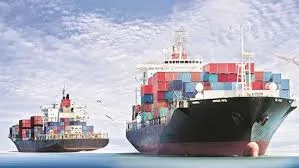
Maritime trade policy covers all measures and/or actions of government influence in cargo moving from one point to another by sea with the eventual objective of increasing efficient and secure international trade. There are many ways that trade policy can be represented. Some of the common areas are trade agreements with other countries, procurement of port rules and inspections, tariffs(surcharges), and security rules.
Key aspects:
- Trade Agreements:
International agreements, such as GATS (General Agreement on Trade in Services), will minimize barriers on trade when moving vessel transport services across borders. - Cabotage Laws:
Cabotage laws restrict the coastal trade of a nation only to vessels that fly the flag of that nation, with some exceptions for certain limited types of vessels. - Port Rules and Regulations:
Policies that govern port infrastructure, port efficiency, and seaport security, are the foundation of maritime transport acceptability. - Safety/Security:
Maritime transport policies give priority to safety and security of the vessel, seaports, and trade routes using rules and regulations, bilateral agreements and international treaties. - Environmental Regulations:
Maritime trade policy aims to protect the marine environment by addressing the impacts of maritime transport, environmental pollution and sustainably managing marine resources. - Trade Facilitation:
Trade facilitation does mean streamline custom processes, simplify ports paperwork, and ultimately improve efficiencies at ports for any human or commodity transport. - Promote National Shipping:
Many nations promote the use of flagged vessels not auxiliary (by ships supply of opportunity); often through subsidization.
Examples of Maritime Trade Policies in Action:
- Cabotage Law in India:
India restricts coastal trade to India-flagged ships (with some exceptions for specific types of ships). - UNCTAD Work:
UNCTAD is actively working in the field of maritime law to promote the development of international conventions and provide legal advice while increasing awareness of the adoption and implementation of relevant legal instruments. - International Chamber of Shipping (ICS):
The ICS makes policy recommendations to both governments and global regulators, with a view to encouraging a sustainable and efficient maritime sector. - European Union – EU’s Common Maritime Policy:
The EU’s Common Maritime Policy is designed, among other things, to address the uses of the seas (e.g., trade, transport, fishing, etc.) with the purpose of ensuring the sustainable use of marine resources through a more holistic approach.
Impact of Maritime Trade Policy:
- Economic growth:
Trade is anchored in maritime transport (for participants reliant upon maritime trade) and efficient, secure maritime trade is critical for international trade and economic growth. - Supply Chain Resilience:
Maritime trade policies are one element of ensuring global supply chain resilience in the face of potential disruption (e.g., climate change/current climate activity, geopolitical events, etc.). - Environmental sustainability:
Maritime trade policies aimed at addressing environmental impacts of maritime transport will be a key component of sustainable ocean use. - National Interests:
Maritime trade policies can be overtly shaped by national interests (e.g., growth of national shipping; security considerations; support role in economic development etc.).