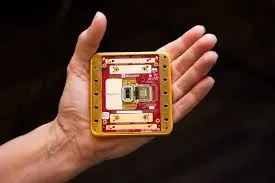
Microsoft has made a significant advancement in quantum computing by unveiling its Majorana 1 chip, a processor designed with an innovative topological core architecture. This development has the potential to transform the computing landscape, providing a stable and scalable method for quantum computing that seeks to address complex industrial and scientific challenges. In contrast to conventional quantum chips, Majorana 1 features topological qubits, which are naturally more resistant to errors.
What Makes the Majorana 1 Chip Different?
Majorana 1 is fundamentally based on the use of topological superconductors, a cutting-edge state of matter that enables the generation and control of Majorana particles. These particles are instrumental in creating topological qubits, which exhibit far greater stability than the traditional qubits utilized in current quantum computing. Stability remains a key challenge in quantum computing, as errors can easily compromise calculations. With this advanced chip, Microsoft intends to decrease the need for error correction, thus making quantum computing more practical and scalable.
According to Microsoft, thetopological approachallows qubits to maintain their states more efficiently, which is essential for performinglarge-scale quantum computations. If successful, this could lead to quantum computers that arereliable and capable of solving real-world problemsin ways classical computers cannot.
How Does Majorana 1 Enable Large-Scale Quantum Computing?
One of the most significant features ofMajorana 1is itsscalability. Microsoft envisions a future wheremillions of qubitscan be integrated into a single, compact chip.Why is this important?Because the true power of quantum computing comes into play only whenlarge numbers of qubits work together.
Withtraditional quantum chips, adding more qubits increases errors and makes computation unstable. However,Majorana 1 aims to eliminate this bottleneckby using topological qubits, which areless prone to noise. If successful, this approach will allowquantum computers to handle complex simulations, encryption, and optimization tasks—problems that classical supercomputers struggle to solve.