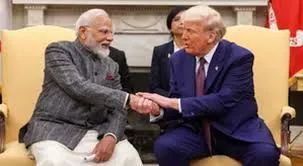
Prime Minister Narendra Modi’s visit to the United States has laid the foundation for a stronger partnership between India and the US, emphasizing trade, defense, and strategic cooperation. His meeting with US President Donald Trump underscored significant areas for cooperation, with the goal of fostering economic growth and ensuring global stability. This visit represented a crucial step forward in the evolving Indo-US relationship, featuring agreements on trade expansion, defense arrangements, counterterrorism efforts, and regional security initiatives.
How Will Indo-US Trade Relations Grow?
A key takeaway from the visit was the pledge to increase bilateral trade to $500 billion by 2030. India and the US have both committed to enhancing trade partnerships in areas such as artificial intelligence, semiconductors, and essential supply chains for strategic minerals. This initiative aims to address trade imbalances and generate new economic opportunities for both nations.
India has committed to boosting its imports of US oil, gas, and military equipment, which will assist in reducing the US trade deficit with India. Further, talks on tariff reductions aim to create a fair and balanced trade environment for businesses in both nations. The discussions are focused on ensuring long-term economic cooperation through trade policy reforms.
What Does the Defense Agreement Include?
A major highlight of the visit was the United States’ decision to sell F-35 stealth fighter jets to India, a move that significantly boosts India’s defense capabilities. This agreement places India among the select few countries that operate these advanced jets, strengthening its military preparedness.
The visit also confirmed a ten-year roadmap for defense collaboration, with potential plans for the co-production of jet engines and other military technologies. With billions of dollars in expected military sales, this partnership enhances India’s strategic position in the Indo-Pacific region. The report that this deal aligns with the US strategy to strengthen its allies in Asia against emerging security threats.