
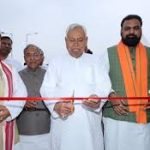
Bihar Chief Minister Nitish Kumar made a significant statement on the political infrastructure and competitive politics Monday with the inauguration of a six-lane bridge over the River Ganges that connects Patna (where he is Based) with Raghopur (located in Lalu Prasad’s political base). The infrastructure project has significant political value because it connects the power center of the state with the constituencies of the chief opposition leader.
The bridge was inaugurated when near Kachchi Dargah, a mosque on the eastern fringe of Patna. The ceremony also included several high-level state officials such as Deputy Chief Ministers Samrat Choudhary and Vijay Kumar Sinha, and the Assembly Speaker Nawal Kishor Yadav, who is the local MLA of the Patna Sahib constituency of which Kachchi Dargah forms part.
Direct Engagement with Opposition Territory
With the ceremony over and a fifth consecutive election campaign in the offing, Kumar, then, arguably politically very strategically, drove straight to Raghopur (a non-city area constituency of the opposition leader Tejashwi Yadav), in a direct interaction with the opposition leader’s political area.
In Raghopur, Bihar’s longest-serving Chief Minister, was well received by the local population. On the other hand, Kumar expressed his pleasure of the change in connection and economic perspectives effect of this important infrastructure project.
Transformative Impact on Rural Connectivity
Kumar noted the bridge’s importance for the local people, saying that, “People of Raghopur diyara (riverine area), who were earlier coming to Patna after ferrying across the Ganga using boats, will benefit greatly.” This reinforces how this bridge will solve years of commuter issues for people living in riverine areas.
This bridge represents a major impetus for change in the infrastructure that can eliminate dependence on boat transportation across the Ganges, and allows dependable, year-round connectivity regardless of river conditions. The impact of this change will vary from improvements in economic activity, better access to health care and education, and ultimately an improved quality of life in the region.


