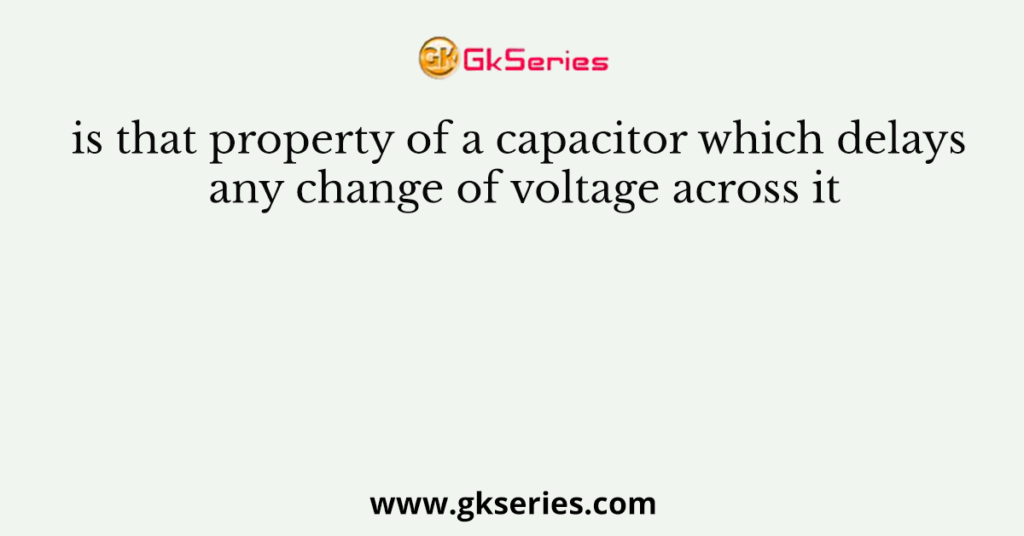
The time constant of an R-C circuit is defined as the time during which capacitor charging voltage actually rises to ______ percent of its value

The time constant of an R-C circuit is defined as the time during which capacitor charging voltage actually rises to ______ percent of its value

Q. The time constant of an R-C circuit is defined as the time during which capacitor charging voltage actually rises to ______ percent of its value. 37, initial 62, initial 62, final 37, final Answer: 62, final

The time constant of an R-C circuit is defined as the time during which capacitor charging voltage actually rises to ______ percent of its value Read More »

As per Coulomb's law, force of attraction or repulsion between two point charges is directly proportional to

As per Coulomb’s law, force of attraction or repulsion between two point charges is directly proportional to

Q. As per Coulomb’s law, force of attraction or repulsion between two point charges is directly proportional to sum of the magnitude of charges square of the distance between them product of the magnitude of charges cube of the distance Answer: product of the magnitude of charges

As per Coulomb’s law, force of attraction or repulsion between two point charges is directly proportional to Read More »

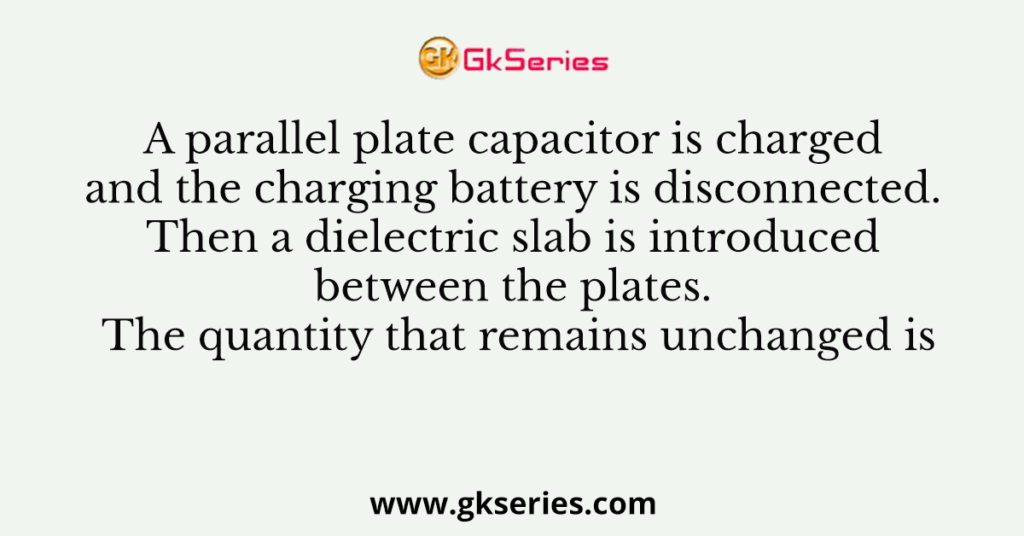
A parallel plate capacitor is charged and the charging battery is disconnected. Then a dielectric slab is introduced between the plates. The quantity that remains unchanged is

A parallel plate capacitor is charged and the charging battery is disconnected. Then a dielectric slab is introduced between the plates. The quantity that remains unchanged is

Q. A parallel plate capacitor is charged and the charging battery is disconnected. Then a dielectric slab is introduced between the plates. The quantity that remains unchanged is________ potential capacity enerey charge Answer: charge

A parallel plate capacitor is charged and the charging battery is disconnected. Then a dielectric slab is introduced between the plates. The quantity that remains unchanged is Read More »

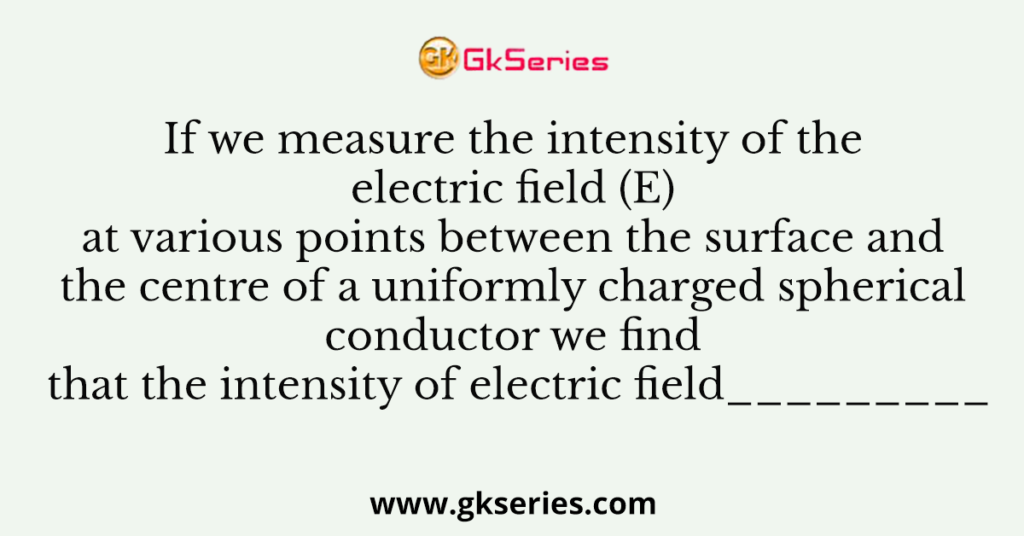
If we measure the intensity of the electric field (E) at various points between the surface and the centre of a uniformly charged spherical conductor we find that the intensity of electric field_________

If we measure the intensity of the electric field (E) at various points between the surface and the centre of a uniformly charged spherical conductor we find that the intensity of electric field_________

Q. If we measure the intensity of the electric field (E) at various points between the surface and the centre of a uniformly charged spherical conductor we find that the intensity of electric field_________ goes on increasing goes on decreasing is zero at all points remains the same at all points Answer: is zero at

If we measure the intensity of the electric field (E) at various points between the surface and the centre of a uniformly charged spherical conductor we find that the intensity of electric field_________ Read More »

Scroll to Top