At what rate of interest, does a sum of money becomes 27 times itself in three years compounded annually, what is rate of interest?

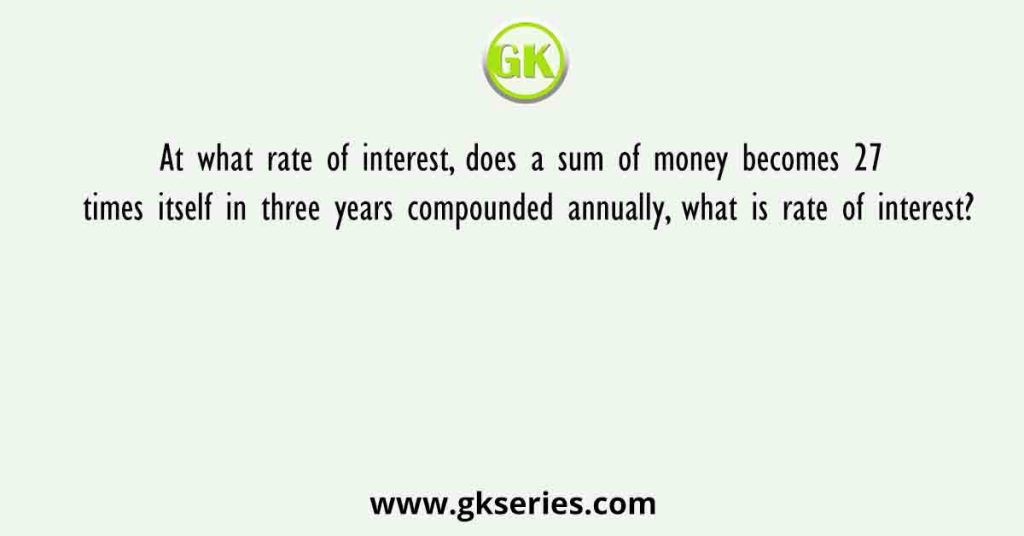
At what rate of interest, does a sum of money becomes 27 times itself in three years compounded annually, what is rate of interest?

At what rate of interest, does a sum of money becomes 27 times itself in three years compounded annually, what is rate of interest? a. 100% b. 250% c. 200% d. 150% e. 300% Sol: Let the principal amount be ‘P’ and rate of compound interest be ‘R’ then, 27P = P * (1 + […]
At what rate of interest, does a sum of money becomes 27 times itself in three years compounded annually, what is rate of interest? Read More »

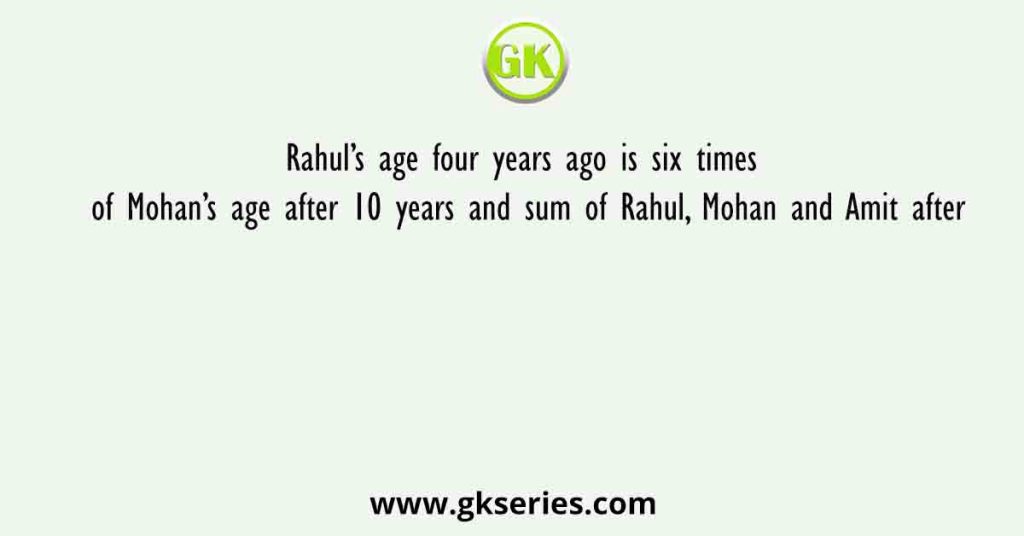
Rahul’s age four years ago is six times of Mohan’s age after 10 years and sum of Rahul, Mohan and Amit after

Rahul’s age four years ago is six times of Mohan’s age after 10 years and sum of Rahul, Mohan and Amit after

Rahul’s age four years ago is six times of Mohan’s age after 10 years and sum of Rahul, Mohan and Amit after two years is 124 years. If Amit is three years older than Rahul, then what is the Amit’s age after 9 years? a.            70 b.            50 c.             45 d.            65 e.            80 Sol:

Rahul’s age four years ago is six times of Mohan’s age after 10 years and sum of Rahul, Mohan and Amit after Read More »

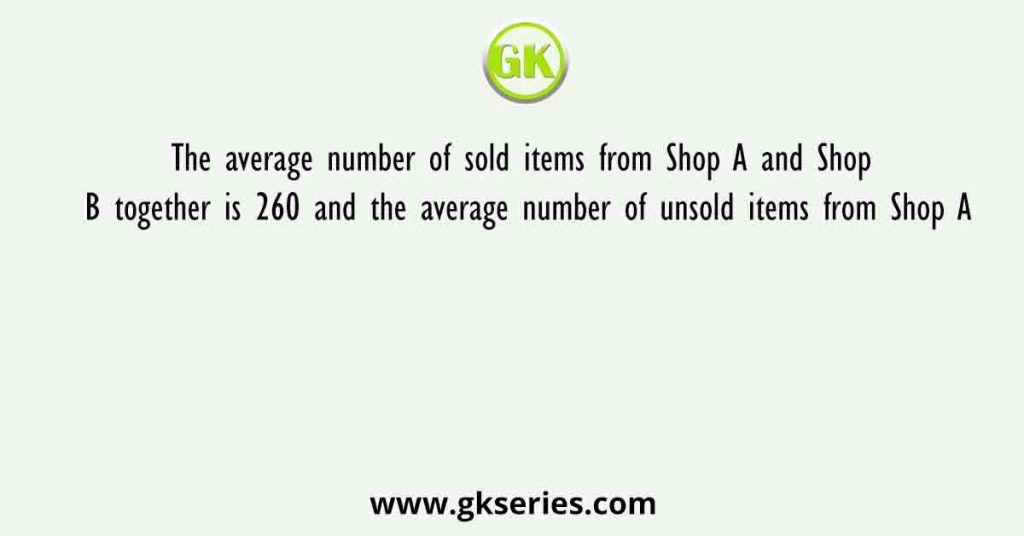
The average number of sold items from Shop A and Shop B together is 260 and the average number of unsold items from Shop A

The average number of sold items from Shop A and Shop B together is 260 and the average number of unsold items from Shop A

The average number of sold items from Shop A and Shop B together is 260 and the average number of unsold items from Shop A and Shop B is 290 and the ratio of sold items from Shop A and Shop B is 27:25. Find the total number of items in Shop B, if the

The average number of sold items from Shop A and Shop B together is 260 and the average number of unsold items from Shop A Read More »

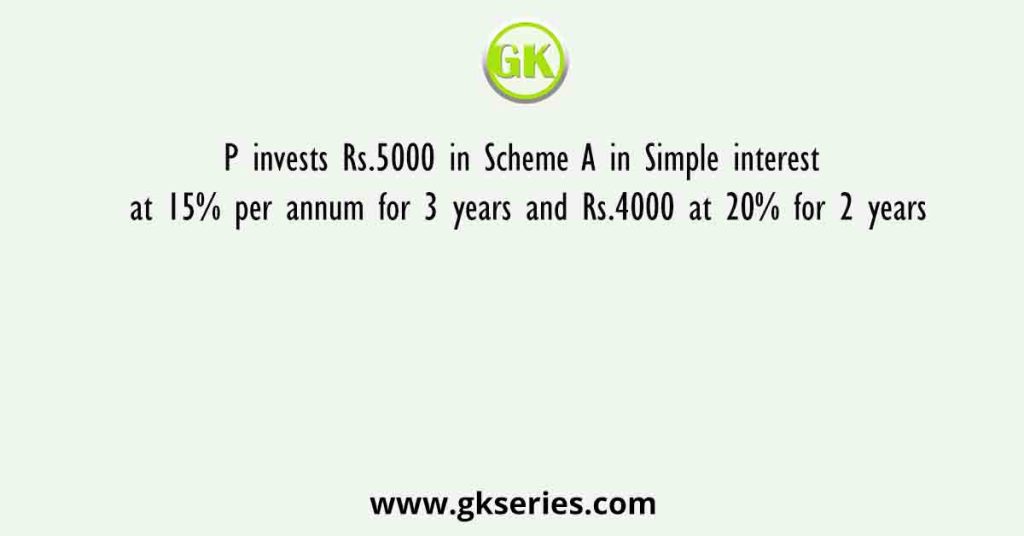
P invests Rs.5000 in Scheme A in Simple interest at 15% per annum for 3 years and Rs.4000 at 20% for 2 years

P invests Rs.5000 in Scheme A in Simple interest at 15% per annum for 3 years and Rs.4000 at 20% for 2 years

P invests Rs.5000 in Scheme A in Simple interest at 15% per annum for 3 years and Rs.4000 at 20% for 2 years in Compound interest in Scheme B and invests the interest obtained from Scheme A and B in Scheme C at 10% for 4 years in Simple interest. Find the interest obtained from

P invests Rs.5000 in Scheme A in Simple interest at 15% per annum for 3 years and Rs.4000 at 20% for 2 years Read More »

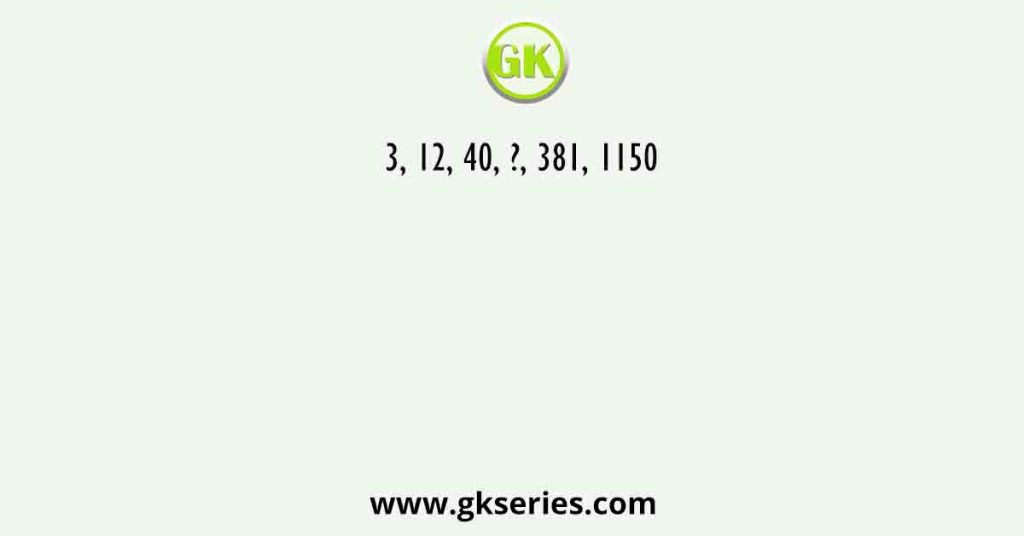
3, 12, 40, ?, 381, 1150

3, 12, 40, ?, 381, 1150

3, 12, 40, ?, 381, 1150 a)            120 b)            80 c)            90 d)            125 e)            132 Sol: 3 * 3 + 3 = 12 12 * 3 + 4 = 40 40 * 3 + 5 = 125 125 * 3 + 6 = 381 381 * 3 + 7 = 1150

3, 12, 40, ?, 381, 1150 Read More »

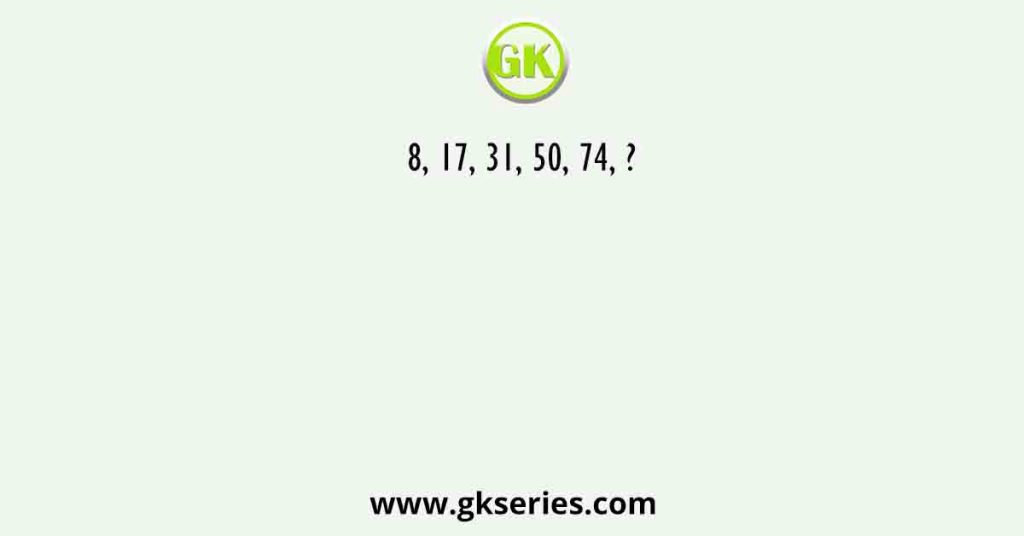
8, 17, 31, 50, 74, ?

8, 17, 31, 50, 74, ?

8, 17, 31, 50, 74, ? a)            111 b)            105 c)            107 d)            103 e)            114 Sol: 8 + 9 = 17 17 + 14 = 31 31 + 19 = 50 50 + 24 = 74 74 + 29 = 103

8, 17, 31, 50, 74, ? Read More »

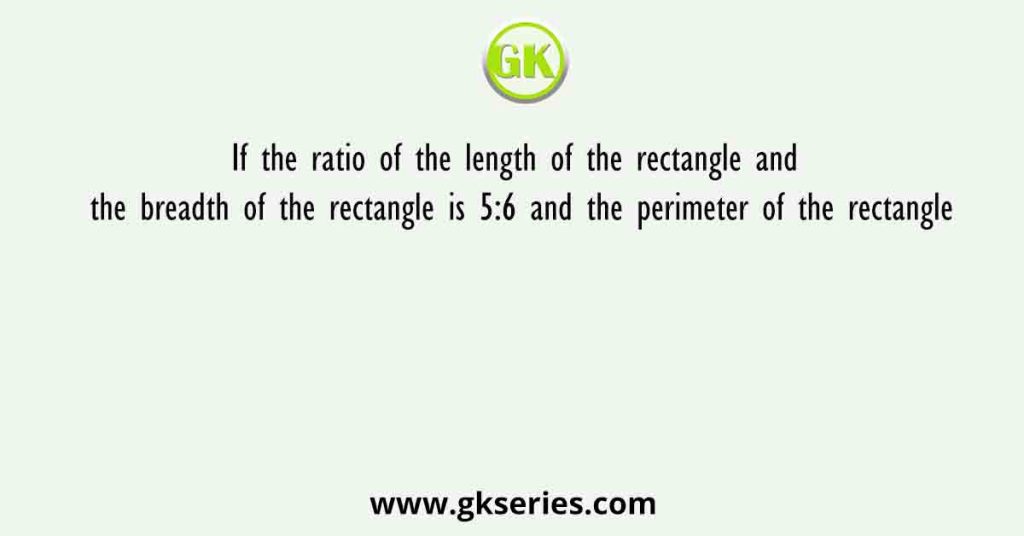
If the ratio of the length of the rectangle and the breadth of the rectangle is 5:6 and the perimeter of the rectangle

If the ratio of the length of the rectangle and the breadth of the rectangle is 5:6 and the perimeter of the rectangle

If the ratio of the length of the rectangle and the breadth of the rectangle is 5:6 and the perimeter of the rectangle is 66 m and the side of the square is 5 m less than the length of the rectangle, then find the area of the square. a)            100 m2 b)            121 m2

If the ratio of the length of the rectangle and the breadth of the rectangle is 5:6 and the perimeter of the rectangle Read More »

Scroll to Top