Two periodic signals 𝑥(𝑡) and 𝑦(𝑡) have the same fundamental period of 3 seconds

Two periodic signals 𝑥(𝑡) and 𝑦(𝑡) have the same fundamental period of 3 seconds

Q. Two periodic signals 𝑥(𝑡) and 𝑦(𝑡) have the same fundamental period of 3 seconds. Consider the signal 𝑧(𝑡) = 𝑥(−𝑡) + 𝑦(2𝑡 + 1). The fundamental period of 𝑧(𝑡) in seconds is (A) 1                           (B) 1.5                        (C) 2                          (D) 3 Ans: 3 Sol:

Two periodic signals 𝑥(𝑡) and 𝑦(𝑡) have the same fundamental period of 3 seconds Read More »

A coil having an impedance of (10 + j100) Ω is connected in parallel to a variable capacitor as

A coil having an impedance of (10 + j100) Ω is connected in parallel to a variable capacitor as

Q. A coil having an impedance of (10 + j100) Ω is connected in parallel to a variable capacitor as shown in figure. Keeping the excitation frequency unchanged, the value of the capacitor is changed so that parallel resonance occurs. The impedance across terminals p-q at resonance (in Ω) is   Ans: 1009 – 1011

A coil having an impedance of (10 + j100) Ω is connected in parallel to a variable capacitor as Read More »

The Thevenin equivalent circuit representation across terminals p-q of the circuit shown in the figure is a

The Thevenin equivalent circuit representation across terminals p-q of the circuit shown in the figure is a

Q. The Thevenin equivalent circuit representation across terminals p-q of the circuit shown in the figure is a (A) 1 V source in series with 150 kΩ            (B) 1 V source in parallel with 100 kΩ (C) 2 V source in series with 150 kΩ            (D) 2 V source in parallel with 200 kΩ Ans:

The Thevenin equivalent circuit representation across terminals p-q of the circuit shown in the figure is a Read More »

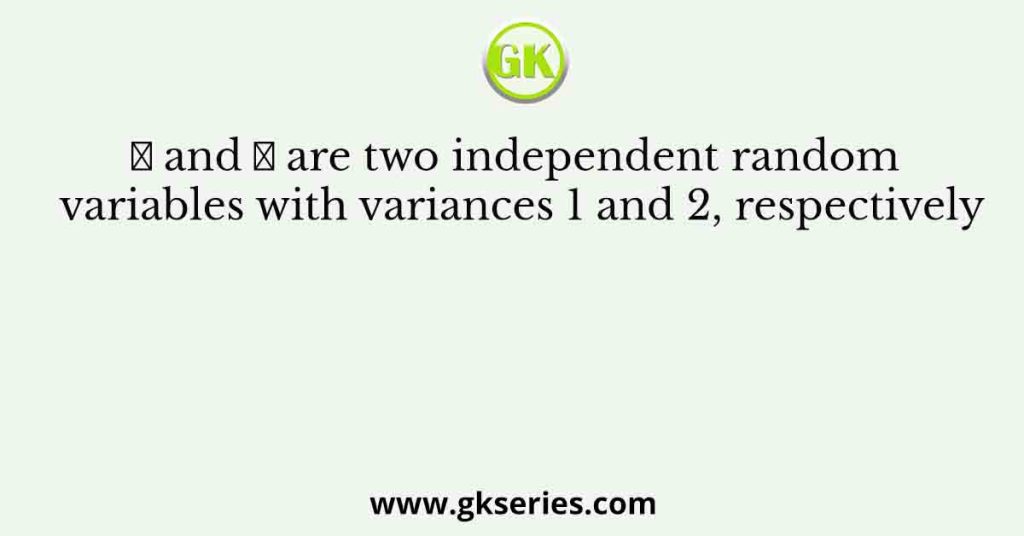
𝑋 and 𝑌 are two independent random variables with variances 1 and 2, respectively

𝑋 and 𝑌 are two independent random variables with variances 1 and 2, respectively

Q. 𝑋 and 𝑌 are two independent random variables with variances 1 and 2, respectively. Let 𝑍 = 𝑋 − 𝑌. The variance of 𝑍 is (A) 0                           (B) 1                           (C) 2                          (D) 3 Ans: 3

𝑋 and 𝑌 are two independent random variables with variances 1 and 2, respectively Read More »

Scroll to Top