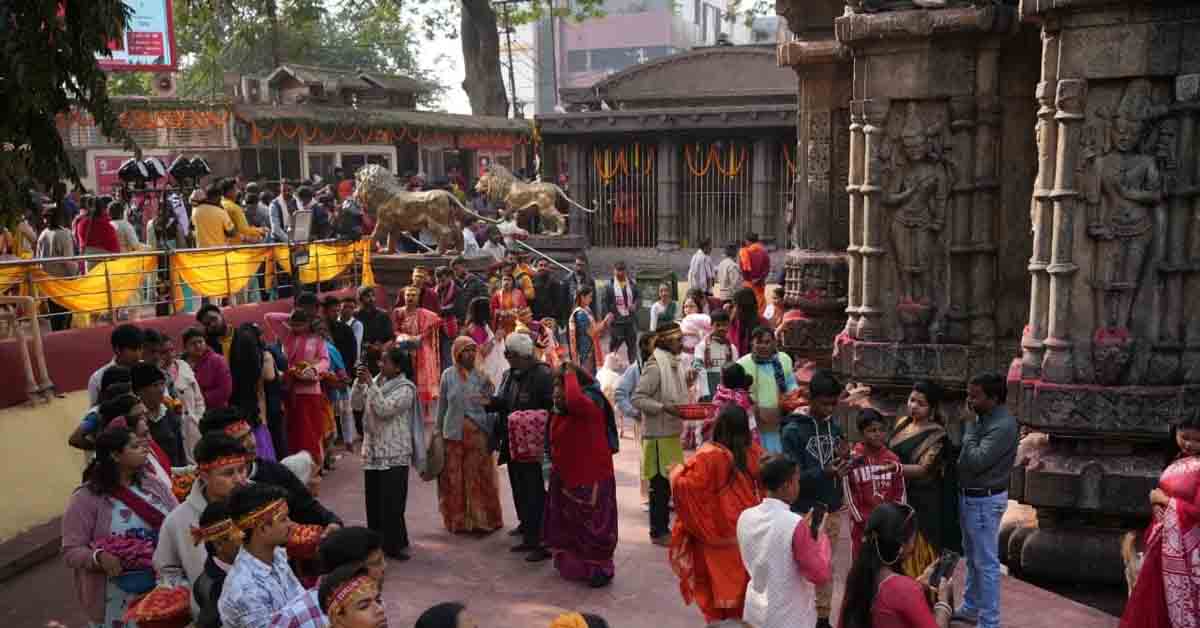
Puhan Biya refers to the traditional belief marking the marriage anniversary of Goddess Kamakhya, observed annually at Kamakhya Mandir. The occasion forms the spiritual core of the Devi Kamakhya Sanskritik Mahotsav, giving the festival its ritual significance beyond performance and celebration.
Rooted in Tantric and Shakta traditions, Puhan Biya symbolises fertility, cosmic union and feminine creative power. Over time, this sacred observance has also become a cultural anchor, around which classical dance and music are performed as acts of devotion, reflecting the seamless blending of ritual, art and spirituality in Assam’s religious landscape.
Ritual Meaning and Significance:
- Union of Shiva and Shakti: Puhan Biya represents the sacred wedding of Goddess Kameswari and Lord Kameswara, celebrating the cosmic union of energy and consciousness.
- The Three-Day Ceremony: The event spans three days, including Adibasha (pre-wedding)Jurun (ceremonial process), and the main marriage ceremony.
- Ritual Procession: The idol of Kameshwara is taken from the Chalata hall of the Kamakhya Temple to the Kameshwara Shiva temple, while Kameshwari is moved to the Panch Ratna hall for the ceremony, usually held on the second or third day.
- Symbolism: It marks the divine union, often associated with promoting harmony, prosperity, and blessings for devotees.
- Cultural and Spiritual Significance: It is a key festival in the Nilachal Hills that reflects the rich cultural traditions of Assam and deep Tantric spiritual philosophy, honoring the goddess in her form as the giver of desires (Kameswari).