

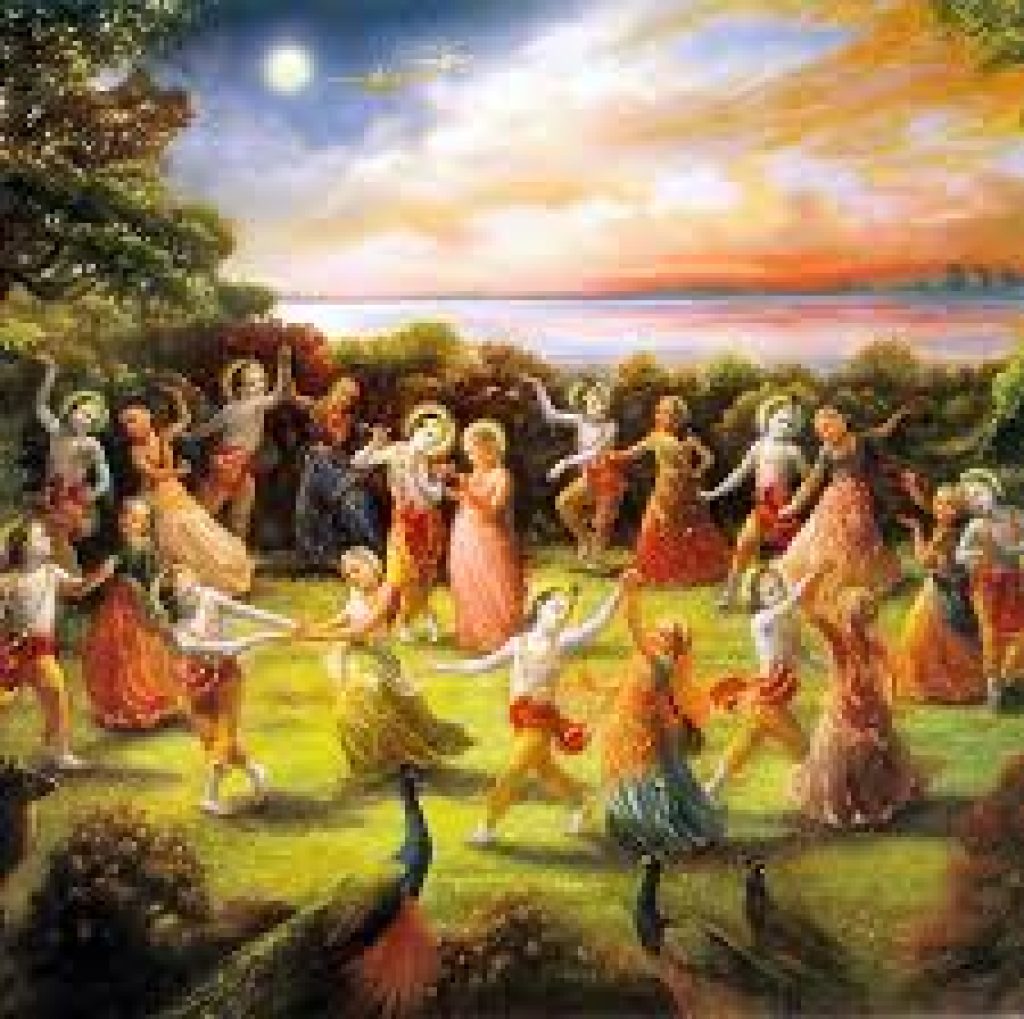
“Rasa Nritya,” or commonly known as, “Rāslīlā,” is a traditional folk dance drama originating from northern India, especially in Uttar Pradesh. It brings to life scenes from Krishna’s adventures and is frequently performed during the joyous festival of Krishna Janmashtami.
Key points:
- “Rasa” in Sanskrit means “essence” or “taste,” and in the context of Indian performing arts, it refers to the emotional or aesthetic experience evoked in the audience. “Nritya” means dance.
- This specific kind of dance drama brings to life scenes from Krishna’s adventures, especially highlighting his fun-loving moments with the Gopis, the cowherdesses.
- Rāslīlā is a folk tradition, with some traditions stating that it was started by Bhagya Chandra in 1779 and is still performed every year on Krishna Janmashtami in some parts of India.
- The dance is performed in a circular formation, with dancers (sometimes boys and girls, or girls only) interlocking hands or clapping rhythmically.
- Rasa dance is a vital part of Manipuri culture, with body movements creating circles or ellipses.
- In Indian classical dance forms like Bharatanatyam, the concept of Rasa is crucial as it brings forth various emotions, creating a vibrant and immersive cultural experience.