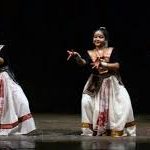
The Northeast, the land of vibrant atmospheric beauty and a multi-colored cultural fabric is highly enriched with innumerable dance forms in the classical and folk genres of all sorts. There are multiple references in written literature and scripture that mention the rich cultural dances of Assam. This article delineates the history of Dev-nati or Nati nas is a unique and ancient prayerful dance of Assam.
Assam has been referred to as Pragjyotish in the ancient Indian epics which suggest that this land has strong roots to mysterious tantric practices. The footprints of an advanced Hindu civilization still can be felt in the decor of sculptures in many ancient temples like the Kamakhya Devi Temple (the greatest Shaktipeeth), Da Parbatiya, Madan Kamdeb Mandir, Haygrib Madhav Mandir, Tukreshwari Dewalaya and many others. These places of worship have been echoing history and cultural heritage for ages. The Dev-Nati or Nati Nas is an oral cultural prayer dance form of Assam which originated from how it danced and prayed in ancient times.
The Bharitiya Natya Shastra was divided into 4 folds or pravitti and they are;
• Dakshinatya
• Avanti
• Panchalmadhyama
• Odramagadhi
The last mentioned fold represents the eastern region comprised of Assam ( erstwhile Pragjyotish). The three basic styles of Dance of Assam are;
• Devdasi
• Oja pali
• Satriya
HISTORICAL EVIDENCES OF THE DEVDASI DANCE FORM IN ASSAM
- In the 9th century, the King of Kamrup Banamala Barman reconstructed the Hatakasulin temple and performed puja to Lord Shiva with songs and dance performances. Lord Shiva is also known as Adidev and the source of all dance forms and such performances were made in his praise. This information is obtained from an inscription recovered from the historical town of Tezpur dated to the 9th century. It uses the keyword duluhangana which means devdasi or deodhani. The meaning of dev is God or deity and Dasi is a female servant in devotion.
- The Kalika Purana has provided references about the custom of music and dance in ancient Assam.
- The Bargaon plates of King Ratna Pal depict the act of paying homage to Natraj Shiva, the cosmic dancer.
- The intricate carvings and stone sculptures of Maa Kamkahya temple, Da Parbatiya , Natraj icon of Sivasagar and the Vishnu idol of Venugopala indicates that Assam can boast traditional dance forms from history.
Paban Bordoloi, a well-known historian says that the Dance of Devdasi took shape in the 4-5 centuries AD and fully developed in the 9th and 10th century.
- In 1538, Raghudevnarayan remade the Vaishnav temple of Haygrib-Madhab at Hajo (Devdasi art form was established in the year of new construction).
- From ancient times the temples had a tradition in worshiping the god with the traditional and Indigenous Devdasi dance.
- Da Parbatiya (600 AD)
- Dergaon Siva temple (700 AD)
- Hatakasulin Siva temple (900 AD)
- Dubi’s Parihareshwar temple (900 AD)
THE NATI S Community
The Devdasis devote their whole life in devotion to the almighty, also are married. They devote their whole life to Life to the Lord, serve the Lord wholly. The Devnatis are from the indigenous Nati community known as Nat Kalita. The Natis lived in the temple premises with their parents. They followed their daily schedule according to the temple schedule and day.
The Devdasis are referred to as three different types.
- Devdasi, These dancers were chosen to dance before the deities’ as offering to that deities moves to please the Lord.
- Beshyas, They were deft and skilled in both singing and dancing. The Beshyas pleased with the decorative fan in front of the deity.
- ordinary dancers. Dancers for common people.
As a general rule, they danced for Lord during puja at noon and during the Sandhya Arti. The dances were performed outside the garden of the temple as well and during the festivals and auspicious occasions.