

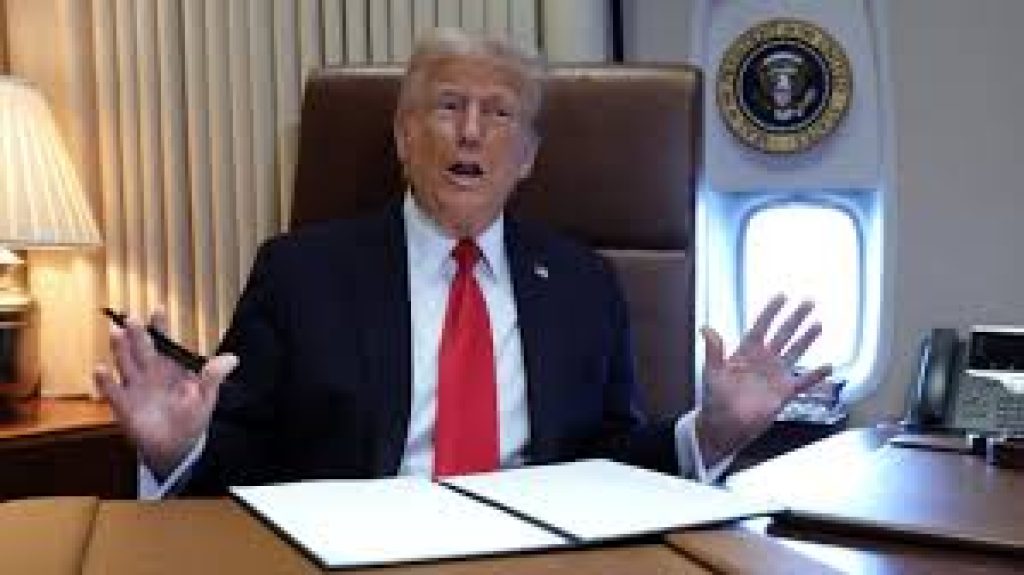
U.S. President Donald Trump has officially announced a 25% tariff on all steel and aluminum imports, with the new policy set to begin on March 4, 2025. This decision removes previous exemptions for specific countries, affecting major exporters such as Canada, Brazil, Mexico, and South Korea. The administration has positioned this move as a way to streamline tariff policies, enhance domestic production, and tackle issues related to foreign dumping. This announcement signifies a return to the protectionist trade strategies that defined Trump’s first term in office.
Why is Trump Reintroducing These Tariffs?
The recently announced tariffs are quite similar to those introduced in 2018, when Trump justified similar trade restrictions by citing national security concerns. Over time, however, exemptions were made for key allies like Canada and Mexico, which helped to ease tensions. Now, with this new directive, all exemptions have been eliminated, reinstating a broad tariff policy that applies uniformly across the board.
Furthermore, the Trump administration has indicated that reciprocal tariffs may be implemented, meaning the U.S. could impose duties that match those faced by American exports in other countries. The goal is to protect U.S. industries and counter foreign pricing strategies that are said to disadvantage American producers. Nevertheless, economic experts caution that this approach could provoke retaliatory measures from trade partners, potentially leading to a new escalation in global trade tensions.
How Have Global Leaders Reacted to These Tariffs?
Trump’s announcement has received strong pushback from Canada, the European Union, and the UK. Canada, one of the largest suppliers of U.S. metal imports, has labeled the move as “unjustified” and is preparing countermeasures. Canadian Prime Minister Justin Trudeau and European Commission President Ursula von der Leyen have vowed strong retaliatory actions.
The UK government, on the other hand, has taken a more cautious approach, with officials stating they will “keep a cool head” while evaluating their response. However, the EU has hinted at potential tariffs on U.S. exports in retaliation.
What Will Be the Economic Impact of These Tariffs?
Domestically, the cost of consumer goods, automobile manufacturing, and construction materials is expected to rise due to increased raw material costs. Small businesses that rely on imported steel and aluminum are likely to face higher operational expenses, which could result in higher prices for consumers.
The National Economic Council has acknowledged concerns and has promised further clarifications on how these tariffs will be implemented. However, economic analysts fear that higher costs for American businesses and potential job losses in downstream industries could offset any gains for the domestic steel and aluminum sectors.
How Will These Tariffs Affect India?
For India, the U.S. decision raises concerns over excess steel and aluminum being dumped in its market. The Indian steel sector has already witnessed a sharp rise in imports, particularly from China. A similar scenario unfolded in 2018, when Trump’s tariffs forced exporters to redirect their supplies, affecting Indian manufacturers.
To counter this, India’s steel ministry has proposed a 25% safeguard duty on certain imported steel products to prevent market flooding and protect domestic producers. Given the ongoing economic shifts, Indian policymakers are expected to closely monitor trade developments and respond accordingly.