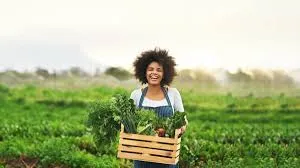
In an unprecedented resolution, the United Nations General Assembly has recognized 2026 as the International Year of the Woman Farmer to recognize and enhance the often-ignored vital role of women in agriculture around the world. This initiative seeks to raise awareness of gender inequalities in access to land and technology, agricultural market participation, and benefits from agricultural policy—particularly in developing countries, where women are often significant actors in food production and rural economies.
The UN General Assembly officially recognized 2026 as the International Year of the Woman Farmer and aims to highlight women’s contributions and challenges in agriculture, raise the cognizance of gender-equitable policies, and have consequences for countries like India where approximately 80% of economically active women work in agriculture but only own 8.3% of farmland.
Women in Global Agriculture: Key Stats
• Women account for approximately 50% of the global food supply.
• In developing countries, women account for 60–80% of food production.
• In India, approximately 80% of economically active women participate in agriculture.
• However, only 8.3% own farmland (NFHS), and 76.95% of rural women engage in agri-work (PLFS 2023–24).
Challenges Faced by Women Farmers
• Double burden by managing agriculture and household labor.
• Limited access to land owns limits access to credit, schemes, and decision making.
• Digital divide of ~51% of rural women 15 years and older do not own a mobile (NSO data).
• Climate Vulnerability, as climate impacts fall disproportionately on women, suffering the most from climate change, particularly in areas prone to drought and flooding.
• Underfinanced – While microfinance exists, it is not scaling appropriately, or long-term finance.
Significance
Recognizing women farmers in 2026 will,
- Push for inclusive growth and gender equality.
- Help build climate-resilient food systems.
- Address structural inequalities in agricultural economies.
- Increase global food security and rural livelihoods.