
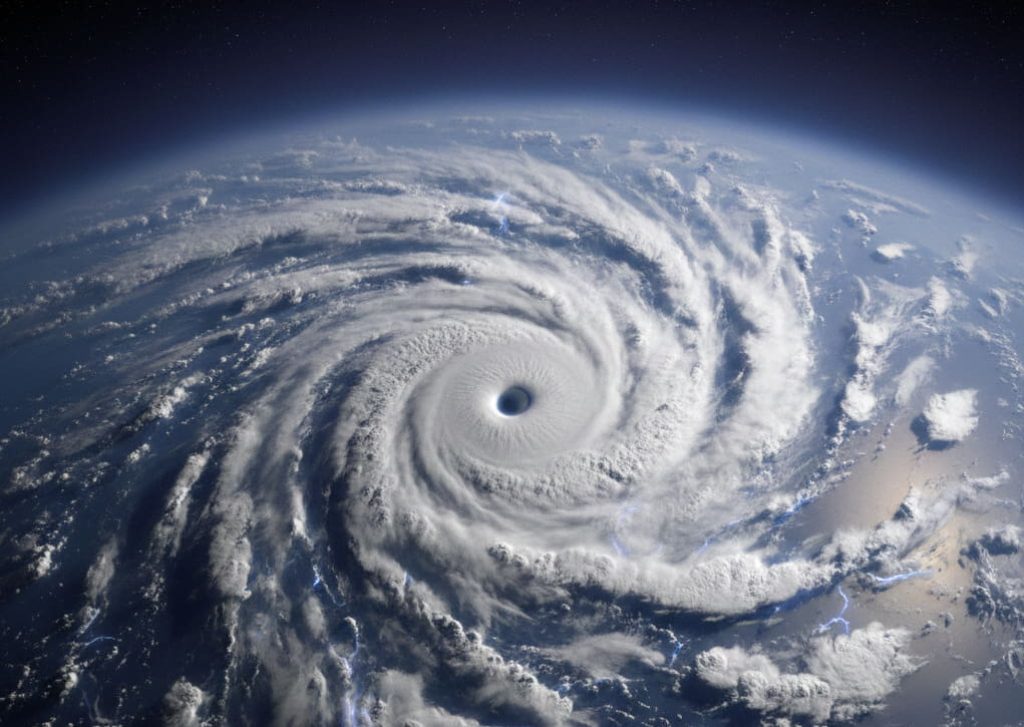
A bomb cyclone is a fast-intensifying mid-latitude storm. It earns the name when the storm’s central pressure plunges dramatically — roughly 24 millibars or more in a day — leading to fierce winds and widespread disruptive weather such as heavy rain or snow, rough seas, and storm surges.
Key Characteristics
- Rapid Intensification: The hallmark is the speed of development, not just the storm’s ultimate strength.
- Latitude Dependence: While “24 millibars in 24 hours” is the standard at 60° latitude, the requirement is lower at lower latitudes (e.g., ~17.8 mb for New York City at 40° latitude).
- Hurricane-Like Features: They can develop “eyes” and produce hurricane-force winds exceeding 74 mph, though they are structurally different from tropical hurricanes.
- Cold-Core Systems: Unlike hurricanes, which are fueled by warm tropical waters, bomb cyclones are “cold-core” storms driven by the clash of cold and warm air masses.
When Do Bomb Cyclones Most Often Occur?
While bomb cyclones can happen any time of year, they are most common during the months of October through March.
This, again, is because of the sharp temperature contrast in the colder months, helping to fuel the explosive storms.
What Impacts Can Bomb Cyclones Bring?
Winds and precipitation (including snowfall) can be rather intense. Blizzard conditions can occur, sometimes accompanied by lightning as the system intensifies.
It’s not uncommon for wind gusts to top 50 mph, which can down trees, knock out power and push water ashore, leading to coastal and lakeshore flooding.