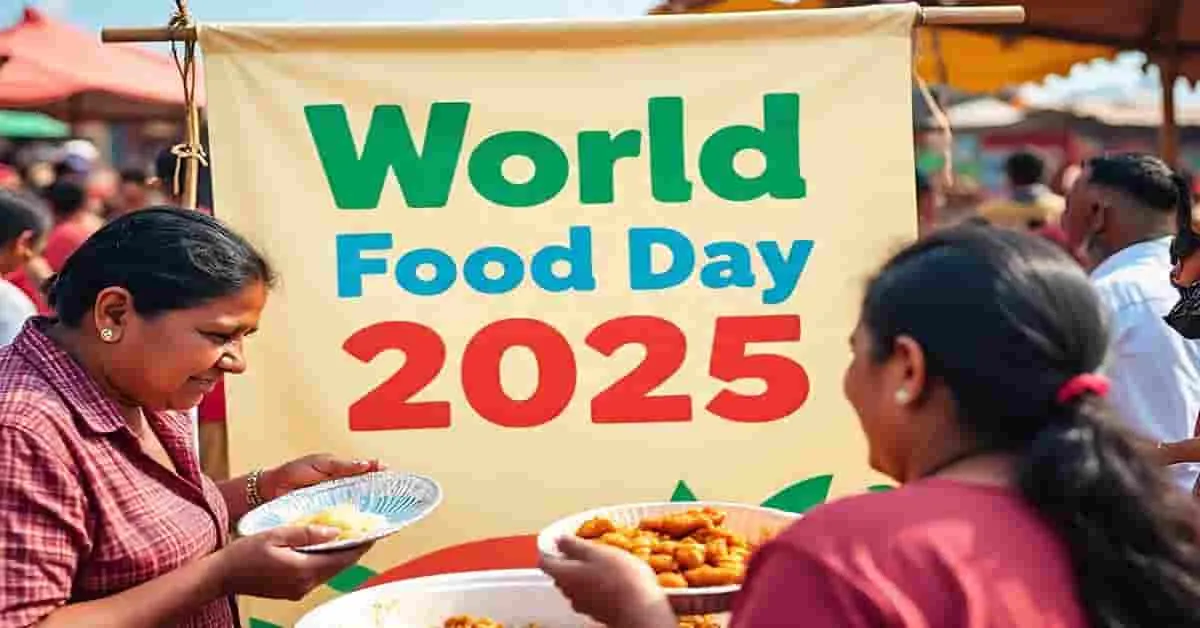
World Food Day observed Evey year on 16 October. It focuses on global food security and sustainable agriculture. The day unites nations, communities, and individuals in reaffirming a shared commitment to end hunger, strengthen food security, and build a future where healthy food is available for all. India’s recent strides in food production, nutrition, and public distribution show its commitment to combating hunger and malnutrition.
World Food Day 2025 Theme
As the world celebrates World Food Day 2025 under the theme “Hand in Hand for Better Foods and a Better Future”, the Ministry of Ayush reiterates India’s commitment to fostering a healthier and more sustainable planet through groundbreaking initiatives like ‘Ayurveda Aahara’ — India’s unique food philosophy rooted in balance, wellness, and nature.
Significance of World Food Day
World Food Day marks the establishment of the Food and Agriculture Organization (FAO) back in 1945. It serves to raise awareness about the challenges surrounding food security and advocates for sustainable farming practices. Each year, over 150 countries join in, underscoring the need for collective efforts to eliminate hunger and create sustainable food systems.
India’s Progress in Food Production
Over the last decade, India has recorded a rise of about 90 million metric tonnes in foodgrain production while fruit and vegetable output has increased by more than 64 million metric tonnes. India now ranks first globally in milk and millets production and is the second-largest fish, fruit and vegetable producer in the world. Honey and egg production have also doubled compared to 2014. The country has also made its mark globally as India’s agricultural exports have nearly doubled over the past 11 years.
Key Government Initiatives Ensuring Food and Nutritional Security
National Food Security Mission (NFSM)
To strengthen production, the Government launched the National Food Security Mission (NFSM) in 2007–08. Its objectives were to increase the production of rice, wheat and pulses through area expansion and productivity enhancement,restoring soil fertility and productivity, creating employment opportunities andenhancing farm level economy. In 2014–15, NFSM was expanded to include coarse cereals, continuing its focus on productivity, soil health, and farmer income. In 2024–25, it was renamed the National Food Security & Nutrition Mission (NFSNM), with a dual emphasis on food production and nutrition.
National Food Security Act (NFSA)
The Act covers up to 75 percent of the rural and 50 percent of the urban population, totaling 81.35 crore people as per Census 2011, under the Antyodaya Anna Yojana (AAY) and priority households. AAY families receive 35 kg of foodgrains per month, while priority households get 5 kg per person per month. Currently, about 78.90 crore beneficiaries are covered under the Act.
Pradhan Mantri Garib Kalyan Anna Yojana (PMGKAY)
The Pradhan Mantri Garib Kalyan Anna Yojana (PMGKAY) was launched with the specific purpose of ameliorating the hardships faced by the poor and needy due to economic disruptions caused by the COVID-19 outbreak in the country. The core function of PMGKAY is to distribute foodgrains free of cost to the households already identified and covered by the NFSA. The scheme was operational in seven phases. Phase VII of the PMGKAY was in operation up to 31.12.2022.
The Central Government, in order to remove the financial burden of the poor beneficiaries and to ensure nationwide uniformity and effective implementation of the programme for support of the poor, had decided to provide food grains free of cost to Antyodaya Anna Yojana (AAY) households and Priority Households (PHH) beneficiaries, beginning from 1st January 2023 under the PMGKAY. The period for distribution of free of cost foodgrains has been extended for five years from 1st January, 2024, with an estimated financial outlay ofRs. 11.80 lakh croretotally to be borne by Central Government.
PM POSHAN (POshan SHAkti Nirman) Scheme
- The PM POSHAN (POshan SHAkti Nirman) Scheme is a crucial national initiative designed to enhance education and combat hunger by improving the nutritional status of children in Government and Government-aided schools, thereby encouraging regular attendance among disadvantaged students. Under this scheme, one nutritious hot cooked mid-day meal is provided to all primary students up to age of 14 years.
- Allocation from DFPD for FY 24-25: 22.96 LMT of Rice & Wheat.
Rice Fortification and Nutrition Enhancement
India’s rice fortification programme began in 2019 to combat micronutrient deficiencies. Fortified rice is made by blending extruded Fortified Rice Kernels (FRK) with rice in the ratio of 1% by weight. These FRK contain rice flour and three major micronutrients, namely Iron, Folic Acid, and Vitamin B12, they resemble milled rice in size, shape, and color and have the same aroma, taste, and texture as normal rice.
Modernisation of Public Distribution System
The SMART-PDS initiative aims to digitise and streamline foodgrain procurement, supply chain, ration card management, and biometric distribution. The Mera Ration 2.0 app enhances transparency, providing real-time beneficiary data. Nearly all ration cards are Aadhaar-seeded, and most Fair Price Shops use electronic point-of-sale devices. The One Nation, One Ration Card scheme ensures portability of benefits nationwide.
Open Market Sales Scheme (Domestic) [OMSS(D)]
Surplus food grains (Wheat & Rice) are sold through the Open Market Sales Scheme (Domestic) [OMSS(D)] to increase market availability, control inflation, and ensure affordability for the general public.
This helps to:
- Increase availability of foodgrains in the market
- Control inflation by stabilizing prices
- Ensure food security
- Make foodgrains more affordable for the general population
In addition, Bharat Atta and Bharat Rice were launched to provide wheat flour and rice to general consumers at subsidized rates under the Open Market Sale Scheme Domestic (OMSS-D) policy.