UGC NET(National Eligibility Test) Adult Education - Previous Years Solved Papers | Paper III November 2017
- (1) Guide lines for maintenance to human welfare
- (2) Economic Development
- (3) Political Development
- (4) Religious Development
Answer: (1)
- (1) Identify the design of the study
- (2) Identify the intent or objective of the study
- (3) Specify the type of people to used in the study
- (4) Describe the study
Answer: (2)
⭐ Make GKSeries Your Preferred Source on Google
Add GKSeries as Preferred Source- (1) Community Custom
- (2) Community Development
- (3) Community Mobilization
- (4) Community Participation
Answer: (3)
- (1) Sympathy
- (2) Empathy
- (3) Transference
- (4) Displacement
Answer: (2)
- (1) Interview Schedule
- (2) Mailed Questionnaire
- (3) Structured Interview
- (4) Panel Interview
Answer: (3)
- (1) Follow up action
- (2) Continuing education
- (3) Reporting
- (4) Monitoring
Answer: (1)
- (1) Attractive and costly
- (2) Easy to use
- (3) Prepared by teacher themselves
- (4) Learner specific and the level
Answer: (4)
- (1) Cost - Benefit ratio
- (2) Efficiency - effectiveness trade - off
- (3) Quantity - Quality trade off
- (4) Out come - Input ratio
Answer: (4)
- (1) Old Age, Social Disability, Help Income
- (2) Out come, Associated, Social Development Health Institute
- (3) Old Age, Survivor Disable Health Insurance
- (4) Old Age, Survivor Disability Health Insurance
Answer: (4)
- (1) A Drug Control Programme
- (2) A Child Welfare Centre
- (3) Polio - Eradication Programme
- (4) An NGO working in Child Welfare
Answer: (2)
- (1) Certified School
- (2) Fit Persons Home
- (3) Observation Home
- (4) Borstal School
Answer: (3)
- (1) Explanatory Research
- (2) Descriptive Research
- (3) Evaluation Research
- (4) Experimental Research
Answer: (4)
- (1) Factories Act
- (2) Mines Act
- (3) Plantation Labour Act
- (4) Trade Union Act
Answer: (1)
- (1) Resource Development for Primary Education
- (2) Resource Development for Adult Education
- (3) Resource Development for Population Education
- (4) Skills Development Course for Literates
Answer: (3)
- (1) M.N. Roy
- (2) Balwant Rai
- (3) Babu Giri
- (4) J.S. Verma
Answer: (2)
- (1) Role taking
- (2) Role playing
- (3) Role expectation
- (4) Role reorganisation
Answer: (2)
(a) Strong desire to learn
(b) Our own caste person to teach
(c) Clear goal before them
(d) Receive satisfaction from what they have learnt
Code :- (1) (a) and (b)
- (2) (a), (c) and (d)
- (3) (a), (b) and (d)
- (4) (b) and (d)
Answer: (2)
(a) The law of readiness
(b) The law of exercise
(c) The law of attention
(d) The law of effect
Code :- (1) (a) and (c)
- (2) (b) and (c)
- (3) (a), (b) and(c)
- (4) (a), (b) and (d)
Answer: (4)
(a) Scientific investigation
(b) Documentary analysis
(c) Surveys
(d) Experiments
Code :- (1) (b) and (c)
- (2) (a) and (b)
- (3) (a), (b) and (c)
- (4) (c) and (d)
Answer: (1)
(a) Adult learning activities
(b) Solution of problems
(c) Improve performance
(d) Develop Job related skill
Code :- (1) (a) and (b)
- (2) (b) and (c)
- (3) (a), (c) and (d)
- (4) All above
Answer: (3)
(a) Training needs assessment
(b) Training implementation
(c) Training programme development
(d) Evaluation and follow - up
Code :- (1) (a), (c), (b),(d)
- (2) (c), (a), (b), (d)
- (3) (a), (b), (c),(d)
- (4) (c), (b), (a), (d)
Answer: (1)
(a) Teacher and Student
(b) School and Colleges
(c) Curriculum and Teaching methods
(d) Processes and contents
Code :- (1) (a) and (b)
- (2) (a) and (c)
- (3) (a) and (d)
- (4) All above
Answer: (2)
(a) To support voluntary organisations for rural development.
(b) To finance small and medium enterprises.
(c) Promotion of appropriate rural technologies.
(d) To act as a nodal point for use of appropriate rural technologies.
Code :- (1) (a), (b), (c)
- (2) (b), (c), (d)
- (3) (a), (c), (d)
- (4) (a), (b), (c), (d)
Answer: (3)
(a) Out line of proposed work
(b) Conditions of Research
(c) Planning of proposed work
(d) Result of Research
Code :- (1) (a) and (b)
- (2) (b) and (c)
- (3) (a) and (d)
- (4) (a) and (c)
Answer: (4)
(a) Learning obtained through transformation of experience into knowledge
(b) Learning through training
(c) Learning through content analysis
(d) Learning through experience to draw conclusion
Code :- (1) (a) and (b)
- (2) (a) and (c)
- (3) (a) and (d)
- (4) (b) and (c)
Answer: (3)
(a) Identification of target audience.
(b) Identification of Mass.
(c) Production objective choice of content and format.
(d) Production for planning and management.
Code :- (1) (a) and (b)
- (2) (a) and (c)
- (3) (a) and (d)
- (4) (b) and (c)
Answer: (2)
(a) Research planning
(b) Statical method
(c) Providing review of literature
(d) Put up the predictive statement
Code :- (1) (a) and (c)
- (2) (b) and (c)
- (3) (a) and (d)
- (4) (a), (b) and (d)
Answer: (4)
(a) Investigation of Individual
(b) Investigation of Mass
(c) Single Instance or Event Considered
(d) Multi Event Considered
Code :- (1) (a) and (b)
- (2) (a) and (c)
- (3) (a) and (d)
- (4) (b) and (c)
Answer: (2)

- (1) (iv) (iii) (ii) (i)
- (2) (i) (ii) (iii) (iv)
- (3) (iv) (i) (ii) (iii)
- (4) (iv) (i) (iii) (ii)
Answer: (2)
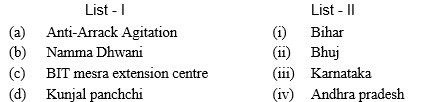
- (1) (i) (ii) (iii) (iv)
- (2) (ii) (iii) (iv) (i)
- (3) (iv) (iii) (i) (ii)
- (4) (iv) (ii) (iii) (i)
Answer: (3)
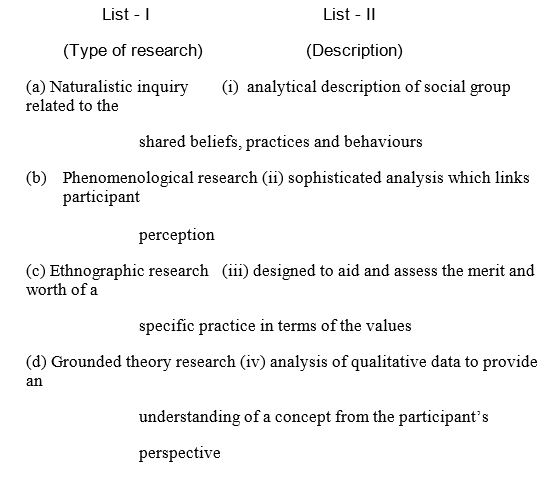
- (1) (i) (iii) (iv) (ii)
- (2) (iv) (i) (ii) (iii)
- (3) (iv) (ii) (iii) (i)
- (4) (i) (iii) (ii) (iv)
Answer: (2)
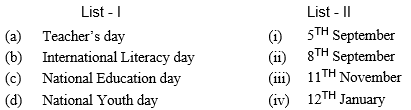
- (1) (ii) (iii) (iv) (i)
- (2) (iv) (i) (iii) (ii)
- (3) (iv) (i) (ii) (iii)
- (4) (i) (ii) (iii) (iv)
Answer: (4)
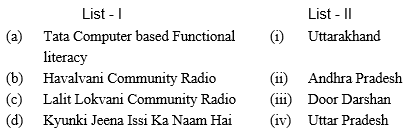
- (1) (i) (ii) (iv) (iii)
- (2) (ii) (i) (iv) (iii)
- (3) (iii) (ii) (iv) (i)
- (4) (ii) (iii) (iv) (i)
Answer: (2)
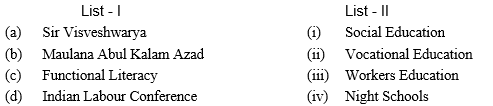
- (1) (iv) (i) (ii) (iii)
- (2) (iv) (iii) (ii) (i)
- (3) (iii) (ii) (i) (iv)
- (4) (iii) (ii) (iv) (i)
Answer: (1)
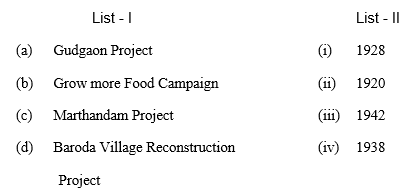
- (1) (iv) (iii) (ii) (i)
- (2) (iii) (ii) (i) (iv)
- (3) (iii) (ii) (iv) (i)
- (4) (ii) (iii) (i) (iv)
Answer: (4)
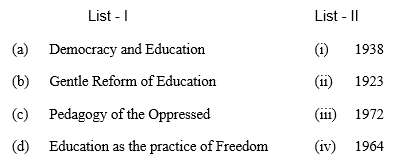
- (1) (i) (ii) (iii) (iv)
- (2) (i) (ii) (iv) (iii)
- (3) (ii) (iii) (i) (iv)
- (4) (iv) (i) (ii) (iii)
Answer: (1)
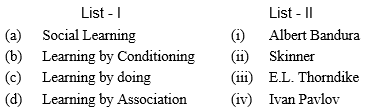
- (1) (iv) (iii) (ii) (i)
- (2) (i) (ii) (iii) (iv)
- (3) (iv) (i) (ii) (iii)
- (4) (iv) (i) (iii) (ii)
Answer: (2)
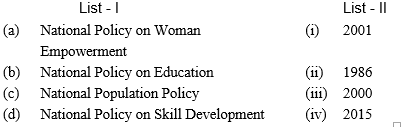
- (1) (i) (ii) (iii) (iv)
- (2) (ii) (iii) (iv) (i)
- (3) (iii) (iv) (i) (ii)
- (4) (iv) (iii) (i) (ii)
Answer: (1)
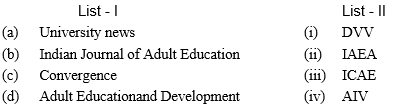
- (1) (i) (ii) (iv) (iii)
- (2) (iv) (ii) (i) (iii)
- (3) (iii) (ii) (i) (iv)
- (4) (i) (iv) (iii) (ii)
Answer: (3)
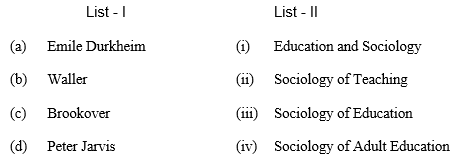
- (1) (i) (ii) (iv) (iii)
- (2) (i) (iv) (ii) (iii)
- (3) (ii) (iii) (iv) (i)
- (4) (i) (ii) (iii) (iv)
Answer: (4)
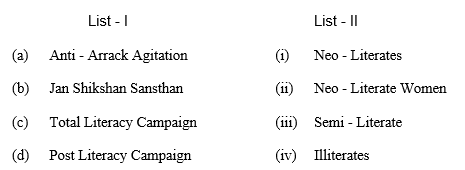
- (1) (i) (iii) (iv) (ii)
- (2) (ii) (iii) (iv) (i)
- (3) (ii) (i) (iv) (iii)
- (4) (i) (ii) (iii) (iv)
Answer: (3)
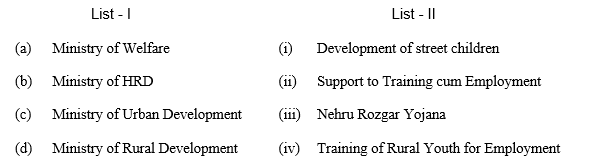
- (1) (i) (ii) (iii) (iv)
- (2) (ii) (i) (iii) (iv)
- (3) (i) (iii) (ii) (iv)
- (4) (ii) (iii) (i) (iv)
Answer: (1)
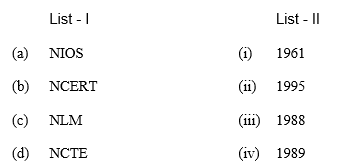
- (1) (ii) (i) (iv) (iii)
- (2) (iv) (i) (iii) (ii)
- (3) (iii) (ii) (i) (iv)
- (4) (iii) (ii) (iv) (i)
Answer: (2)
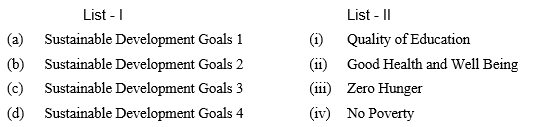
- (1) (iv) (iii) (ii) (i)
- (2) (iv) (i) (iii) (ii)
- (3) (iv) (i) (ii) (iii)
- (4) (i) (ii) (iii) (iv)
Answer: (1)
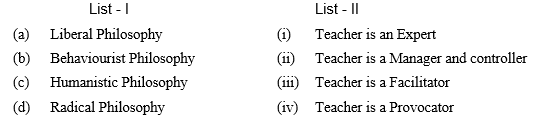
- (1) (iv) (iii) (ii) (i)
- (2) (i) (ii) (iii) (iv)
- (3) (iv) (i) (ii) (iii)
- (4) (iv) (i) (iii) (ii)
Answer: (2)
(a) Non - Formal Education
(b) National Literacy Mission
(c) District Primary Education Programme
(d) Sarva Shiksha Abhiyan
Code :- (1) (a), (b), (c), (d)
- (2) (b), (c), (a), (d)
- (3) (a), (c), (d), (b)
- (4) (c), (d), (a), (b)
Answer: (1)
(a) Teaching
(b) Deciding Goals
(c) Reconsideration
(d) Evaluation
Code :- (1) (a), (b), (c), (d)
- (2) (b), (a), (d), (c)
- (3) (a), (b), (d), (c)
- (4) (b), (c), (d), (a)
Answer: (2)
(a) Lakshadweep
(b) Kerala
(c) Tirupura
(d) Mizoram
Code :- (1) (b), (a), (c), (d)
- (2) (b), (c), (a), (d)
- (3) (b), (a), (d), (c)
- (4) (a), (b), (d), (c)
Answer: (3)
(a) Final Solution
(b) Determine objectives
(c) Analysis of Situation
(d) Evaluation
Code :- (1) (c), (b), (a), (d)
- (2) (a), (c), (d), (b)
- (3) (b), (d), (a), (c)
- (4) (d), (a), (c), (b)
Answer: (1)
(a) Application
(b) Comprehension
(c) Knowledge
(d) Analysis
Code :- (1) (d), (b), (c), (a)
- (2) (c), (b), (a), (d)
- (3) (a), (c), (d), (b)
- (4) (b), (a), (c), (d)
Answer: (2)
(a) Felt need
(b) Tentative theory
(c) Evidence
(d) Definition of Problems
Code :- (1) (a), (b), (c), (d)
- (2) (d), (c), (b), (a)
- (3) (a), (d), (b), (c)
- (4) (a), (c), (b), (d)
Answer: (3)
(a) Identifying the Problem
(b) Selection of tool and method
(c) Report Writing
(d) Formulation of Hypothesis
Code :- (1) (a), (b), (c), (d)
- (2) (a), (d), (b), (c)
- (3) (b), (c), (d), (a)
- (4) (c), (d), (a), (b)
Answer: (2)
(a) Planning the Extension work
(b) Identification of Community needs
(c) Rapport Building
(d) Selection of project
Code :- (1) (a), (b), (c), (d)
- (2) (b), (a), (c), (d)
- (3) (b), (a), (d), (c)
- (4) (b), (c), (d), (a)
Answer: (2)
(a) Observation
(b) Empathy
(c) Encouragement
(d) Summarising
Code :- (1) (b), (c), (a), (d)
- (2) (c), (a), (b), (d)
- (3) (a), (b), (c), (d)
- (4) (b), (a), (c), (d)
Answer: (3)
(a) National Policy on Women empowerment
(b) National Population Policy
(c) National Policy on Education
(d) National Policy on Health
Code :- (1) (a), (b), (d), (c)
- (2) (c), (a), (b), (d)
- (3) (b), (c), (d), (a) ,
- (4) (c)(b), (a), (d)
Answer: (3)
Reason (R) : “Learning : The Treasure Within” is the main frame work for the future educational development.
Code :- (1) (A) is correct.
- (2) (R) is the correct explanation of (A).
- (3) (R) is correct.
- (4) Both (A) and (R) are correct.
Answer: (3)
Reason (R) : Total literacy campaign failed to reduce the gender gap in literacy achievers.
Code :- (1) Both (A) and (R) are false.
- (2) (A) is true and (R) is false.
- (3) Both (A) and (R) are true and (R) is a correct explanation of (A).
- (4) Both (A) and (R) are true but (R) is not a correct explanation of (A).
Answer: (3)
Reason (R) : More representation samples reduces the error.
Code :- (1) Both (A) and (R) are false.
- (2) (A) is true and (R) is false.
- (3) Both (A) and (R) are true but (R) is not a correct explanation of (A).
- (4) Both (A) and (R) are true and (R) is a correct explanation of (A).
Answer: (4)
Reason (R) : There must be a sustained interaction between university and community.
Code :- (1) (A) and (R) both are correct.
- (2) (A) is correct and (R) is wrong.
- (3) (A) and (R) both are wrong.
- (4) (R) is correct and (A) is wrong.
Answer: (1)
Reason (R) : We have a Gross enrollment ratio of 15 - 18 % in higher education in India.
Code :- (1) Both (A) and (R) are true but (R) is not a correct explanation of (A).
- (2) Both (A) and (R) are false.
- (3) (A) is true and (R) is false.
- (4) Both (A) and (R) are true and (R) is a correct explanation of (A).
Answer: (4)
Reason (R) : Evaluation of social development programmes can be done qualitatively only.
Code :- (1) Both (A) and (R) are false.
- (2) Both (A) and (R) are true and (R) is a correct explanation of (A).
- (3) (A) is true and (R) is false.
- (4) Both (A) and (R) are true but (R) is not a correct explanation of (A).
Answer: (2)
Reason (R) : There were gaps in the market requirement and the capabilities of the graduates produced.
Code :- (1) Both (A) and (R) are false.
- (2) (A) is false and (R) is true.
- (3) Both (A) and (R) are true but (R) is not a correct explanation of (A).
- (4) Both (A) and (R) are true and (R) is a correct explanation of (A).
Answer: (4)
Reason (R) : Attention of adults to only literacy programme was reported to be of very limited use and value.
Code :- (1) Both (A) and (R) are false.
- (2) (A) is true and (R) is false.
- (3) Both (A) and (R) are true and (R) is a correct explanation of (A).
- (4) Both (A) and (R) are true but (R) is not a correct explanation of (A).
Answer: (3)
Reason (R) : In India, women’s Education was neglected for many years.
Code :- (1) Both (A) and (R) are true but (R) is not the correct explanation of (A).
- (2) Both (A) and (R) are true but (R) is the correct explanation of (A).
- (3) (R) is true and (A) is false.
- (4) Both (A) and (R) are true.
Answer: (1)
Reason (R) : Methodology of on the Job training is considered better than off the Job training.
Code :- (1) Both (A) and (R) are correct but (R) is not a correct explanation of (A).
- (2) (A) is true and (R) is false.
- (3) Both (A) and (R) are false.
- (4) Both (A) and (R) are correct and (R) is a correct explanation of (A).
Answer: (4)
Reason (R) : Status of the members of a group has no role in communication process.
Code :- (1) Both (A) and (R) are correct but (R) is not a correct explanation of (A).
- (2) Both (A) and (R) are correct but (R) is a correct explanation of (A).
- (3) (A) is correct and (R) is wrong.
- (4) Both (A) and (R) are wrong.
Answer: (3)
Reason (R) : Right to privacy is not a component of right to reproductive health.
Code :- (1) (A) is correct and (R) is wrong.
- (2) (R) is correct and (A) is wrong.
- (3) (A) and (R) Both are correct.
- (4) (A) and (R) Both are wrong.
Answer: (1)
Reason (R) : Faith of formers on traditional agricultural is ending fast.
Code :- (1) Both (A) and (R) are false.
- (2) Both (A) and (R) are true and (R) is not a correct explanation of (A).
- (3) Both (A) and (R) are true and (R) is a correct explanation of (A).
- (4) (A) is false and (R) is true.
Answer: (1)
Reason (R) : Extension as a service and education relies mostly on immediate needs of the people.
Code :- (1) Both (A) and (R) are correct but (R) is not a correct explanation of (A).
- (2) Both (A) and (R) are false.
- (3) Both (A) and (R) are true and (R) is a correct explanation of (A).
- (4) (A) is true and (R) is false.
Answer: (1)
Reason (R) : For growth of discipline of Adult continuous education and extension and professionalisation of the subject sufficient efforts were not done in recent past.
Code :- (1) (A) is wrong and (R) is true.
- (2) (A) is true and (R) is wrong.
- (3) Both (A) and (R) are true and (R) is a correct explanation of (A).
- (4) Both (A) and (R) are true but (R) is not a correct explanation of (A).
Answer: (3)
- (1) Social empowerment of women
- (2) Economic empowerment of women
- (3) Women empowerment
- (4) Educational empowerment of women
Answer: (3)
- (1) Provide Independence of Women.
- (2) Provide Opportunities to Women.
- (3) Provide Gender Equality.
- (4) All of the above.
Answer: (4)
- (1) Literacy
- (2) Gender equality
- (3) Adult Education
- (4) Committees
Answer: (4)
- (1) Gender inequality
- (2) Village committee
- (3) Economic dependence
- (4) Social dependence
Answer: (3)
- (1) Addiction
- (2) Alcohol dependence
- (3) Problem drinking
- (4) Alcohol abuse
Answer: (4)