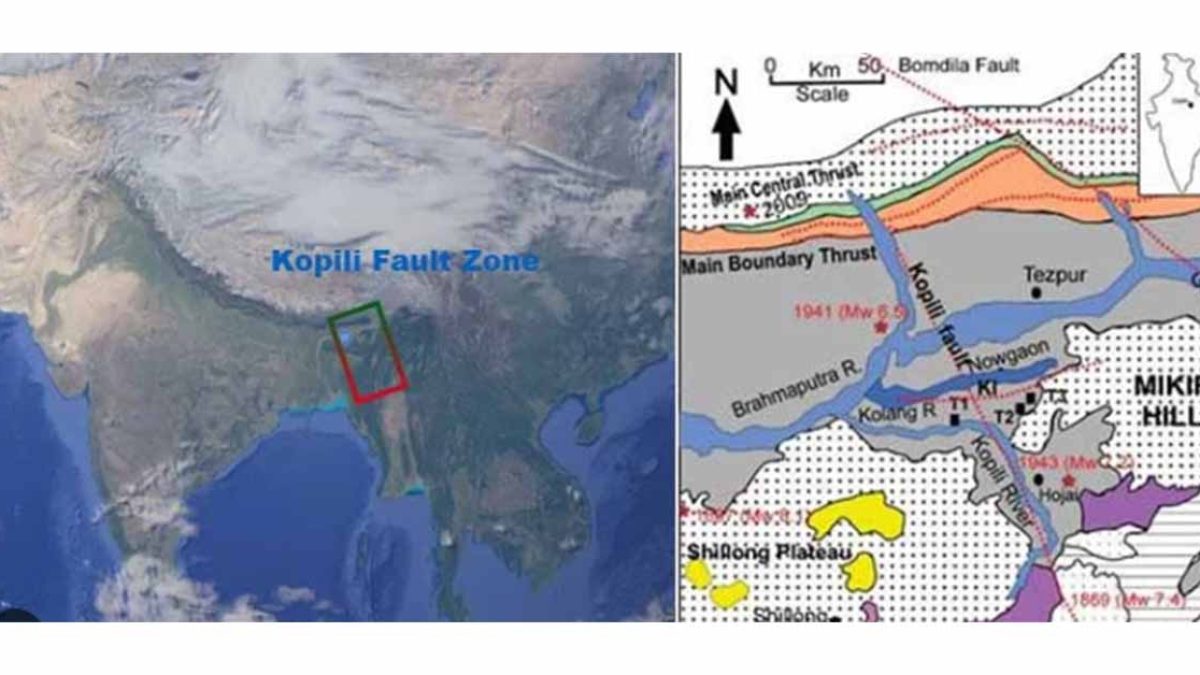
A 5.1-magnitude earthquake that shook central Assam on January 5 has been traced to tectonic activity along the Kopili Fault — one of the most active fault systems in Northeast India. The quake occurred at 4:17:40 am with its epicentre located in Morigaon district, at a depth of 50 km, the NCS said in its report. Assam sits at the collision zone of the Indian and Eurasian plates, which creates intense compressional stress. This stress is distributed across multiple fault systems including the Himalayan Frontal Thrust, Main Boundary Thrust, Main Central Thrust, Kopili Fault and Dhubri Fault — making earthquakes frequent and sometimes severe.
Key highlights:
- Earthquake in Assam was linked to the Kopili Fault, according to the National Centre for Seismology (NCS).
- The tremor occurred recently in the Northeast region, which is already known as a high seismic zone due to active geological faults.
- No aftershocks have been recorded following the earthquake so far, NCS confirmed.
- The Kopili Fault is one of the most seismically active faults in Northeast India and has historically generated several earthquakes.
- Experts noted that the region remains seismically vulnerable, so monitoring is ongoing.
- Authorities reported no major damage or casualties from the tremor.
- The event highlights the importance of earthquake preparedness and infrastructure resilience in Assam and the surrounding region.