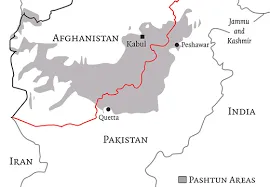
The Durand Line serves as the international border between Afghanistan and Pakistan. It was drawn up in 1893 by Sir Henry Mortimer Durand and Afghan Emir Abdur Rahman Khan. Stretching an impressive 2,640 kilometers (or 1,640 miles), this line extends from the border with China all the way to Afghanistan’s border with Iran.
Key Points:
Establishment: The line was drawn in 1893 to define the spheres of influence between British India and the Emirate of Afghanistan, with the goal of improving diplomatic ties and establishing a boundary.
Significance: This topic is quite controversial, as Afghanistan has never officially acknowledged the line, which slices through the homelands of the Pashtun people, splitting both ethnic Pashtuns and Balochs.
Length and Location: The Durand Line stretches about 2,640 kilometers (or 1,640 miles), running from the border with China all the way to the border with Iran.
Historical Context: This line came about through an agreement between Sir Henry Mortimer Durand, who was a secretary in the British Indian government, and Abdur Rahman Khan, the emir of Afghanistan.
Current Status: While the Durand Line is recognized internationally as Pakistan’s western border, Afghanistan disputes this, and the line continues to be a source of tension and conflict.
Impact: The Durand Line has significantly influenced the region, contributing to political instability, ethnic strife, and a complicated relationship between Afghanistan and Pakistan.
Recent Developments: Pakistan’s recent move to fence the entire Durand Line, a project nearing completion, has physically divided communities and greatly affected the lives of those living on both sides of the border.