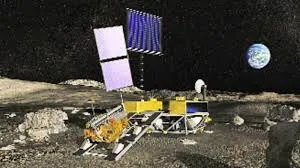
India and Japan’s Chandrayaan-5 (also called LUPEX) mission is advancing to the design phase, aiming to detect water and water-ice at the Moon’s south pole.
Scheduled for launch in 2027–28 on Japan’s H3 rocket, the 6.5-tonne lander and a 350-kg rover equipped with seven instruments (from ISRO, JAXA, ESA, and NASA) will perform in-situ scientific experiments.
The project marks a strong symbol of global collaboration and follows India’s successful Chandrayaan-3 mission.
Mission Overview & Objectives
- Name:Chandrayaan-5 (LUPEX – Lunar Polar Exploration Mission)
- Collaborators:ISRO (India) and JAXA (Japan)
- Goal:Explore water and water-ice at the Moon’s south pole (surface + subsurface)
- PlannedLaunch: 2027-28 aboard Japan’s H3 rocket
- Duration:100 days (proposed)
- Lander:Built by ISRO
- Rover (350 kg):Developed by JAXA
- Instruments:7 onboard, including contributions from ESA and NASA
Scientific Instruments & Capabilities
- One large instrument with four sensors (1 by ISRO, 3 by JAXA)
- ESA: Developing a mass spectrometer
- NASA: Designing neutron spectrometers
Instruments designed for,
- In-situ experiments
- Measuring energy, mass, and hydrogen presence
- Drilling lunar regolith and analyzing water content