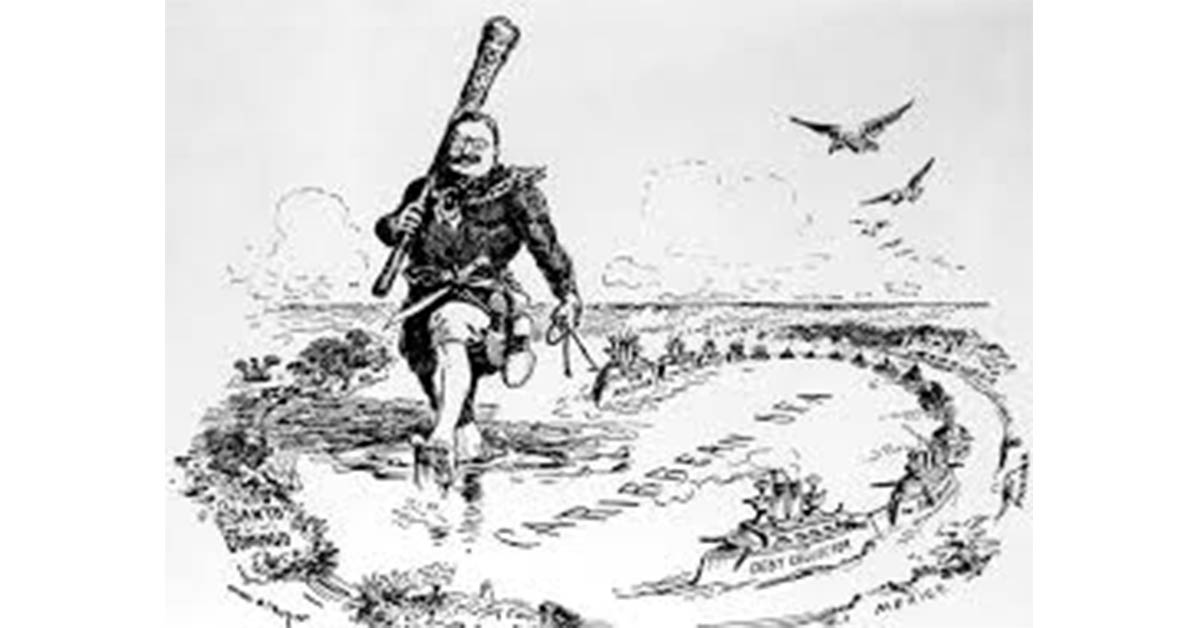
The 1904 Roosevelt Corollary, which built on the Monroe Doctrine, marked a significant shift in U.S. foreign policy from simply deterring European powers to actively intervening in Latin America. It positioned the U.S. as an “international police power,” ready to tackle “chronic wrongdoing” or debt crises, which often meant direct military involvement in the Caribbean and Central America.
Shift from Deterrence to Intervention
• Original Monroe Doctrine (1823): This served as a defensive warning to European nations to steer clear of the Western Hemisphere, relying on a limited U.S. naval presence and the support of the British navy.
• Roosevelt Corollary (1904): This proactive measure allowed for U.S. military intervention to stop European interference, changing the policy from a protective barrier to an enforcement tool.
• Justification: President Theodore Roosevelt contended that in situations of instability or debt defaults (like those in Venezuela and the Dominican Republic), the U.S. had a duty to step in and prevent European debt-collection efforts, which often resulted in long-term occupation.
• “Big Stick” Diplomacy: This approach was defined by the “Big Stick” philosophy, which stressed assertive U.S. dominance and, when necessary, military intervention to maintain stability.
Impact and Consequences
• Interventions: This led to numerous U.S. military occupations in countries such as Cuba, Haiti, Nicaragua, and the Dominican Republic.
• Regional Resentment: The change sparked considerable anti-American feelings in Latin America, as many viewed it as an infringement on their sovereignty.
• “Good Neighbor” Policy: Franklin D. Roosevelt’s “Good Neighbor Policy” in 1934 partially rolled back this approach by renouncing the right to intervene.