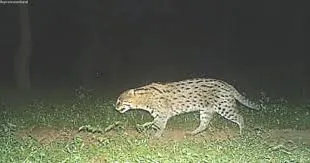
In Rajasthan, the discovery of presence of Fishing Cats (Prionailurus viverrinus) marks the first confirmed record for the Ramgarh Vishdhari Tiger Reserve (RVTR). The identification of the species was made during the normal tiger monitoring program conducted by field biologists and the Dalelpura tiger tracking team. Camera traps were placed in the Ramgarh Range of Bundi district, which helped confirm this record of the species. This discovery is an addition to the already existing small cat diversity for RVTR, as well as a significant finding for the ecological health of its aquatic habitats.
New Addition to Small Cat Diversity
Prior to the Fishing Cat’s detection, RVTR was known to have four small cat species – Jungle Cat (Felis chaus), Rusty-spotted Cat (Prionailurus rubiginosus), Asiatic Wildcat (Felis lybica) ornata and Caracal (Caracal caracal). The Fishing Cat now adds to this number. The new addition further emphasizes the reserve’s role in conserving different types of carnivores. The detection of multiple small carnivores suggests that the ecosystem has returned to a balanced functional diversity level and supports food chain variation.
Significance of the Fishing Cat
The Fishing Cat is classified as Vulnerable on the IUCN Red list and is associated with wetland and riverine associated habitats. The Fishing Cat presence at RVTR indicates that the reserve is supporting relatively intact aquatic ecosystems. Its presence does indicate the wetlands within RVTR are in a healthy state and able to support specialized species. Wetland habitats are crucial for biodiversity and ecosystem services.
Ecological Importance of RVTR
RVTR is home to apex predators, such as tigers and leopards. The Fishing Cat detection demonstrates a level of ecological complexity in the reserve beyond large carnivores. Smaller carnivores play an important role in maintaining ecosystem balance by controlling prey populations and contributing to biodiversity. The RVTR importance as a biodiversity hot spot in Rajasthan is becoming increasingly evident.
Conservation and Monitoring Efforts
Officials are highlighting the importance of ongoing protection and scientific monitoring as crucial steps in preserving the biodiversity of RVTR. This discovery was made possible thanks to the hard work of forest staff who diligently conducted camera trapping and fieldwork. By keeping a close eye on the Fishing Cat’s population and habitat use, continuous monitoring will play a vital role. Safeguarding wetland habitats is key to ensuring the survival of this vulnerable species within the reserve.
Implications for Biodiversity Management
The presence of the Fishing Cat enriches the biodiversity records of RVTR. It also underscores the necessity for conservation strategies tailored to specific habitats, particularly for aquatic and semi-aquatic species. This finding could spark further research into the region’s wetland ecosystems. Moreover, it highlights the significance of integrated management approaches that take into account both land and water habitats.